
The 90% Rule: A How-To Guide for Automating Agency Fulfillment and Reclaiming Your Strategic Role
Are you an agency owner who spends more time managing processes than crafting winning strategies? It's a frustratingly common reality. The daily grind of campaign builds, ad optimization, and lead follow-ups can easily consume the very hours you need to focus on high-level growth and client success. This is where the 90% Rule comes in—a transformative principle that involves automating 90% of your manual fulfillment tasks. It's not just about clawing back a few hours; it's about fundamentally redesigning your agency for infinite scalability and strategic leadership.

Step 1: Audit Your Time Sinks – From Ad Creative to Lead Nurturing
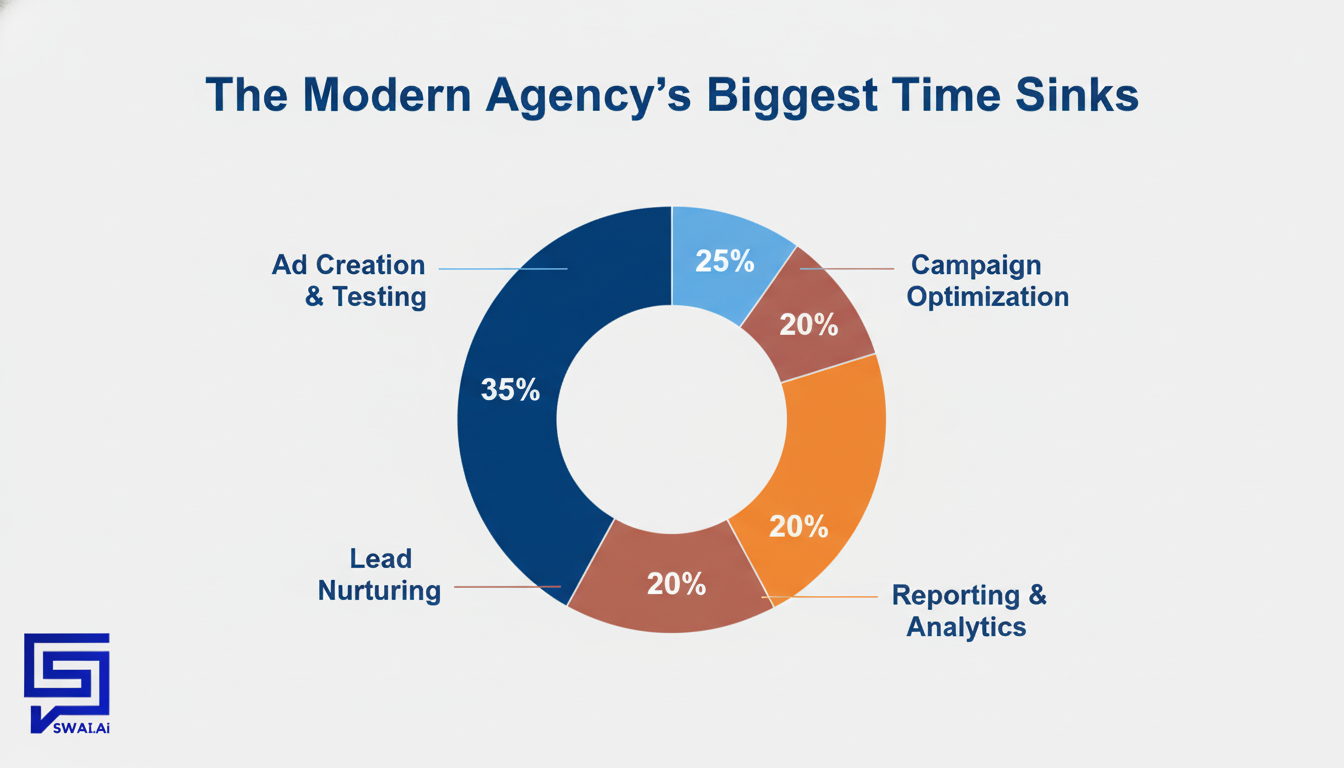
Before you can automate, you must identify what's holding you back. The first step is a ruthless audit of your agency's daily operations. Where does the clock run out? Track the time your team spends on repetitive, manual tasks that, while necessary, don't require high-level strategic input. Be honest and thorough. This isn't about blaming inefficiencies; it's about finding opportunities. Common culprits often include:
-
**Ad Creative & Copy Generation:** Manually designing dozens of visual variations and writing copy for A/B testing.
-
**Media Buying & Bid Optimization:** Constantly monitoring and adjusting bids across multiple platforms like Meta and Google.
-
**Landing Page Creation:** Building, testing, and deploying new landing pages for every offer.
-
**Lead Nurturing:** Writing and scheduling endless email follow-up sequences.
-
**Performance Reporting:** Pulling data from fragmented sources and compiling it into client-facing reports.
Once you have a clear map of these time sinks, you can see exactly where automation will have the most immediate and significant impact.
Step 2: Deploy Autonomous AI Agents, Not Assistants
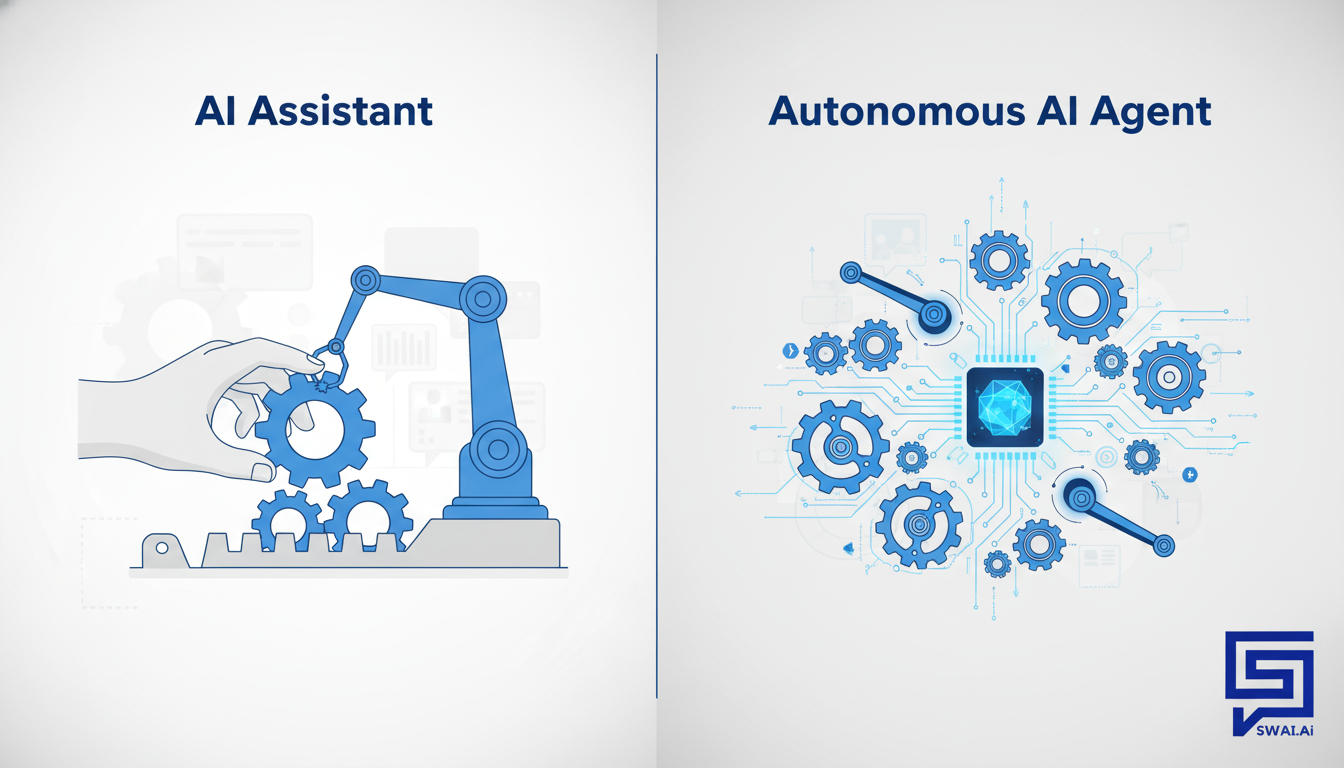
It’s crucial to understand the distinction between AI tools that simply assist and an AI-native system that truly automates. An AI assistant might help you write ad copy faster, but you still have to prompt it, review it, and manually place it into a campaign. An autonomous AI agent, on the other hand, owns the entire workflow. This is the core of the SWAI.ai Revenue OS. Instead of giving you a better shovel, we remove the need for you to dig at all. For example:
-
The **AI Creative Director** doesn't just suggest ideas; it generates all the ad copy and visuals needed for a campaign from a single prompt.
-
The **AI Media Buyer** doesn't just provide bid recommendations; it executes campaigns across channels, analyzes real-time data, and self-optimizes 24/7 to maximize performance.
-
The **AI Sales Agent** doesn't just schedule emails; it nurtures leads with intelligent, responsive communication until they are ready for a sales call.
This is how you eliminate 90% of the work—by deploying a system of interconnected agents that execute end-to-end, freeing your team from the tactical weeds.
Step 3: Transition Your Team from 'Doers' to 'Directors'
Automating fulfillment doesn't make your team obsolete; it makes them more valuable. When AI handles the relentless 'doing,' your talented human staff are liberated to focus on what they do best: thinking, strategizing, and building relationships. This transition elevates every role within your agency. Your project managers become campaign directors, overseeing AI execution and steering strategy. Your copywriters and designers become creative overseers, guiding the AI's vision and ensuring brand alignment. Most importantly, you transform from a systems integrator into a true strategic partner for your clients.
This shift fundamentally changes your agency's value proposition. Clients no longer pay for your time and labor; they pay for your expertise and the incredible outcomes your AI-powered system delivers. This is how you escape the trap of billable hours and move to a model based on billable results, unlocking higher profit margins and client retention.
Conclusion
Achieving the 90% Rule is more than an efficiency upgrade—it's a complete business model transformation. It’s about creating an agency that is not limited by headcount but is powered by an infinitely scalable, autonomous engine. It’s about shifting your focus from the friction of fulfillment to the future of your clients' growth and your own.
Ready to stop managing tasks and start directing strategy? Implementing the 90% Rule is how you build a future-proof agency that scales on your terms. See how SWAI.ai's AI-Native Revenue OS can automate your fulfillment and unlock your true growth potential. Sign up today and transform your agency from a service provider into a strategic powerhouse.
