Beyond Automation: Why Your Agency Needs an 'Operator-Less' Growth Model
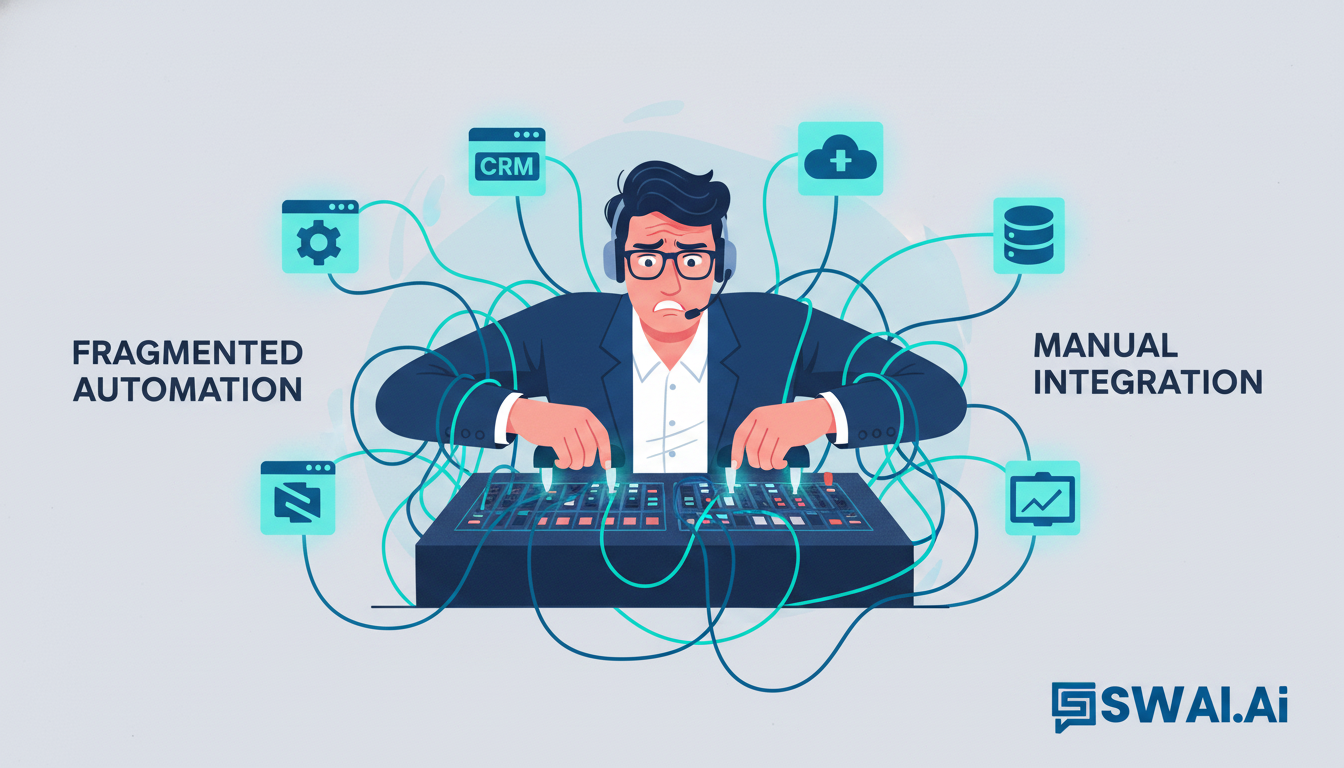
For years, the digital agency world has been sold the dream of 'automation.' We've been told that with the right stack of tools, we can streamline workflows, manage clients, and scale our services effortlessly. Yet, if you're like most agency founders, your reality looks very different. You're still spending countless hours managing the machines, patching broken Zaps, and acting as the human glue between a dozen disconnected platforms. The truth is, traditional automation wasn't the final destination; it was just a stepping stone. It still requires a human operator, and that operator is usually you.
What is an 'Operator-Less' Model?
An 'operator-less' model represents a fundamental shift from automating individual tasks to deploying an autonomous, self-correcting infrastructure. Think of it less like a series of connected tools and more like a true growth engine. This model doesn't just automate a workflow; it autonomously builds, runs, and optimizes the entire client journey—from the first ad click to generating the final performance report. Instead of you telling the system what to do at every step, the system understands the goal and continuously adjusts its own logic and processes to achieve it more efficiently. It's the difference between a remote-controlled car and a self-driving one.
Benefit 1: Achieve True Scalability
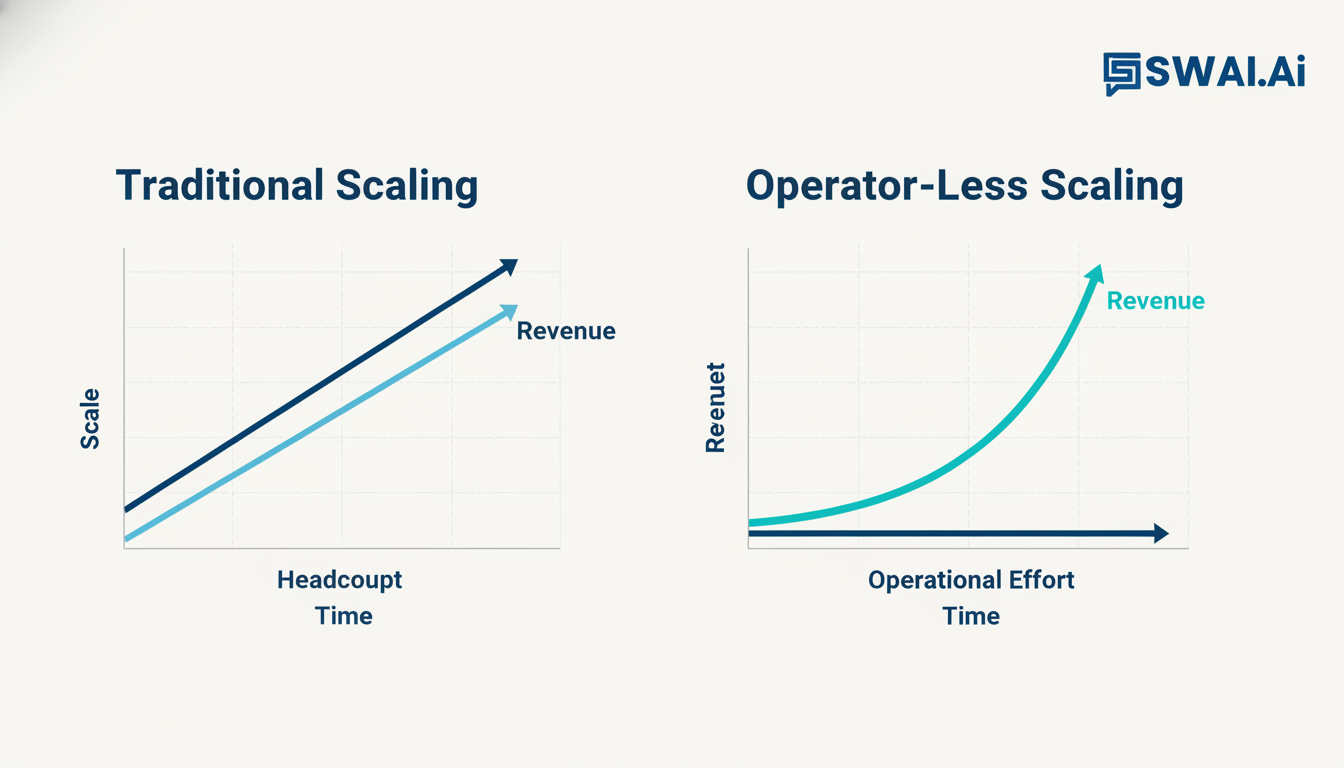
In a traditional agency, growth is often a double-edged sword. Every new client adds a proportional amount of operational complexity, communication overhead, and manual work. Scaling from five to ten clients can feel like it requires double the effort, if not more. This directly links your revenue growth to your headcount, putting a hard ceiling on your profitability and freedom. An operator-less model shatters this link. By running on a unified infrastructure, you can add ten new clients with nearly the same operational effort as adding one. The system handles the onboarding, nurturing, and reporting autonomously, allowing your agency to scale revenue without scaling your team or your workload.
Benefit 2: Gain a Structural Advantage
While your competitors are stuck in meetings to coordinate their fragmented teams and tech stacks, an operator-less agency moves at AI-speed. This isn't just a minor improvement; it's a profound structural advantage. Decisions are made and implemented in real-time by the AI, based on performance data, not on a weekly strategy call. You can test, learn, and optimize client campaigns faster than any human-operated agency ever could. While they are busy troubleshooting broken integrations and manually pulling data for reports, your infrastructure is already launching the next optimized campaign. This speed and agility become your most powerful competitive weapon, allowing you to deliver superior results and win bigger contracts.

Conclusion: The Future is Infrastructure
The future of agency growth won't be defined by finding another clever tool or hiring another project manager. It will be defined by the quality of your underlying infrastructure. Making the shift from being an operator in your business to being the architect of your growth engine is the single most important transition you can make. This move from organized labor to intelligent infrastructure isn't just the next trend; it's the ultimate competitive advantage available to agencies today.
Are you ready to stop managing the machine and finally install a true growth engine? If you want to see what an operator-less infrastructure looks like in practice and how you can build one for your agency, we're building one from scratch. Join the Live build this Tuesday to see the future of agency scalability in action.
