How Top UK Agencies Are Breaking Growth Plateaus with Self-Correcting Infrastructure
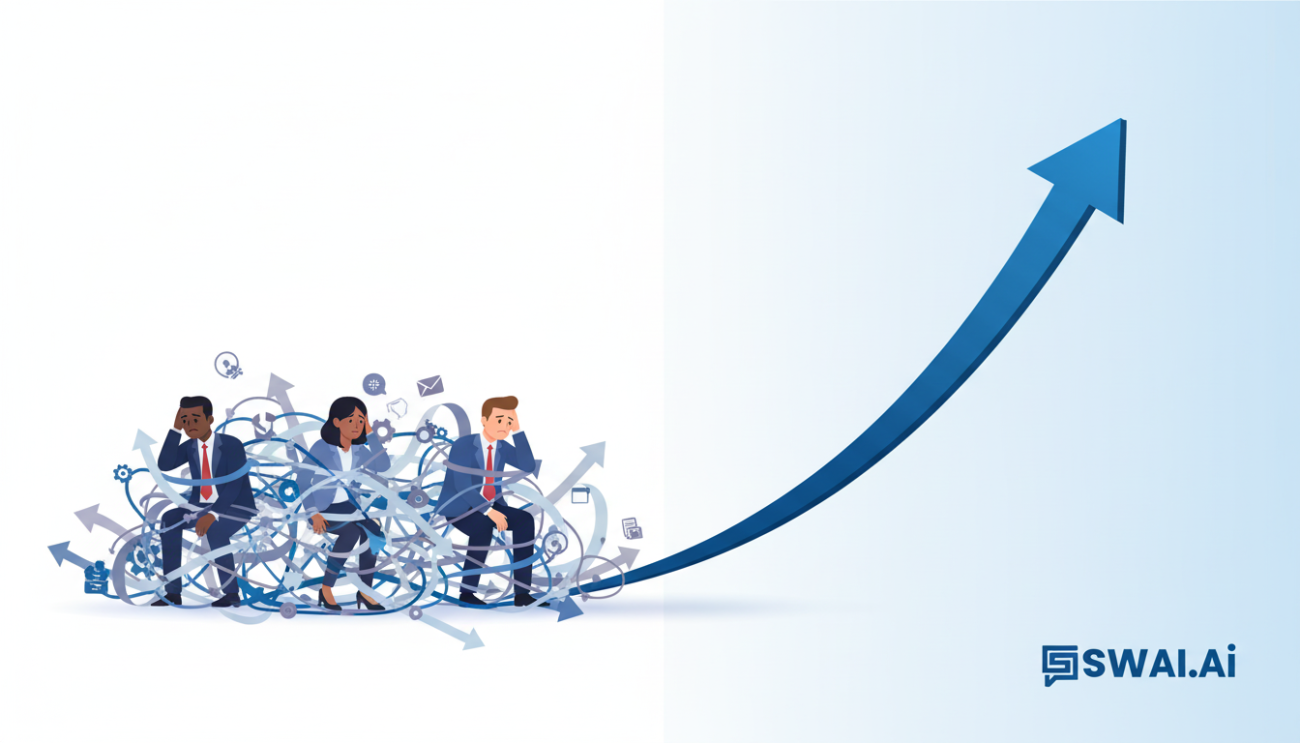
For many successful digital marketing agencies across the UK, there's a familiar, frustrating ceiling. You've mastered your craft, built a solid client base, and your reputation is growing. Yet, every new client seems to stretch your resources thinner, adding more operational chaos than predictable profit. Your systems, once reliable, are now groaning under the weight of scale. It feels like a growth plateau, but what if your most forward-thinking competitors aren't just working harder? What if they're working on a completely different operating system?
The Problem with Traditional 'Automation'
When we talk about systems, the first thought is often 'automation.' We've all tried to stitch together our processes using tools like Zapier, connecting our CRM to our email client or our project management software to Slack. While these tools can handle simple, linear tasks, they are fundamentally brittle. They are a patchwork of organized labour, not a unified infrastructure. When one part of the chain breaks—an API updates or a workflow changes—the entire sequence fails, requiring human intervention to diagnose and fix. This isn't true autonomy; it's just a digital assembly line that still needs constant supervision. It reduces some manual tasks but doesn't eliminate the operational drag or the need for an operator to oversee it all.
Case Study Concept 1: The Lead Conversion Engine
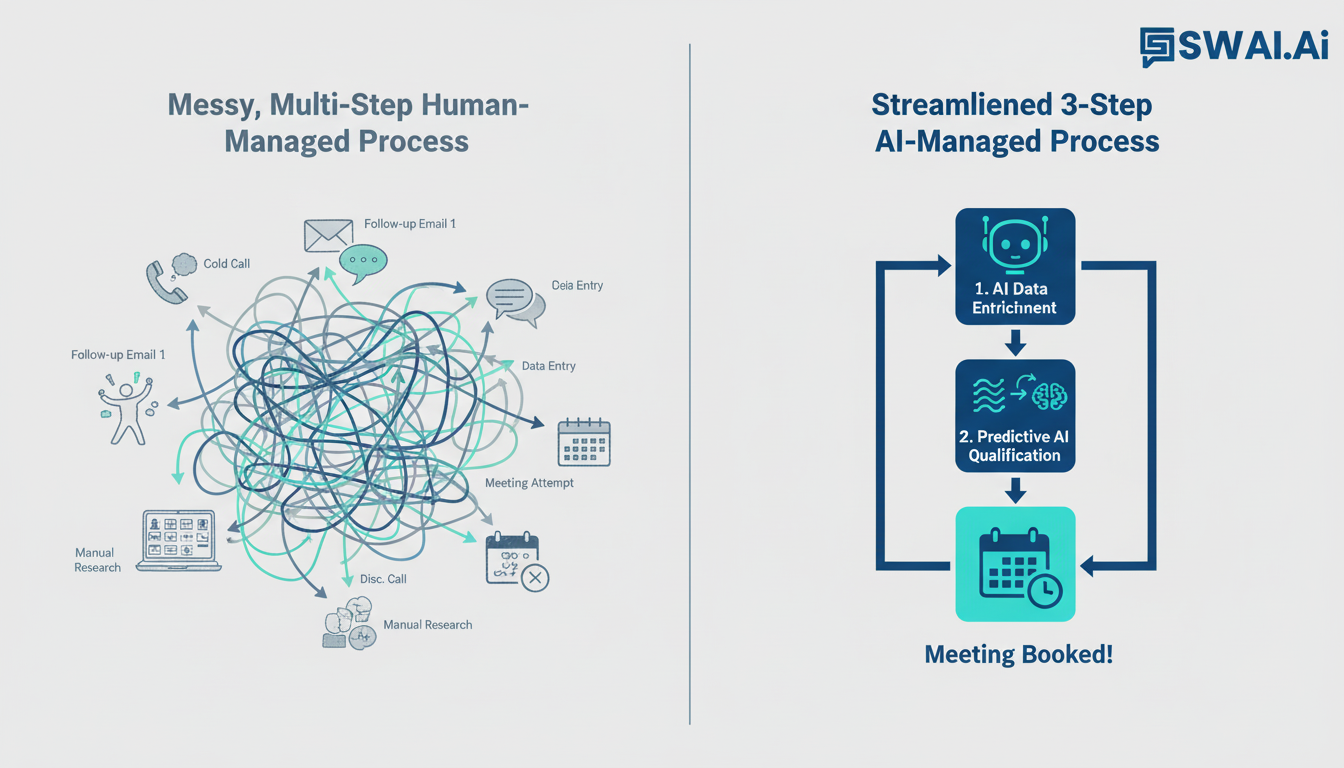
Imagine a top-tier London agency that was drowning in leads but struggling with conversion. Their sales team spent more time qualifying and scheduling than actually selling. They replaced their fragmented lead management tools with a unified AI infrastructure. This system didn't just automate emails; it engaged leads with intelligent conversation, qualified them against ideal customer profiles in real-time, booked qualified meetings directly into sales reps' calendars, and updated the CRM autonomously. The result? The need for manual follow-up vanished, lead quality skyrocketed, and the agency achieved a 50% increase in sales velocity within a single quarter, all without adding a single new salesperson.
Case Study Concept 2: The Autonomous Client Reporting System
A Manchester-based performance marketing agency prided itself on data-driven results, but this commitment came at a high cost: client reporting. The team spent nearly 20 hours of skilled labour every single week manually pulling data from multiple platforms, compiling spreadsheets, and designing presentations. By deploying an autonomous reporting system, they transformed this process entirely. The AI infrastructure now connects directly to their ad platforms and analytics tools, generates comprehensive performance reports in the agency's branding, and even delivers them to clients with personalized insights. This single change freed up 20 hours of high-value employee time per week, allowing them to focus on strategy and client growth instead of administrative tasks.
The Unifying Factor: Self-Correction
What connects these two transformational stories is a principle that goes far beyond simple automation: self-correction. The key isn't just that tasks were performed automatically; it's that the underlying infrastructure was intelligent. The lead conversion engine learned from interactions to improve its qualification criteria, and the reporting system could adapt to changes in API data without breaking. This is the structural advantage of an AI-native system. It doesn't just execute a pre-programmed workflow; it learns, optimizes, and adapts in real-time, all without a human operator. This creates a powerful compounding advantage, where your agency's operational efficiency grows and improves on its own, day after day.
Conclusion: The New Foundation for Agency Growth
The UK agencies that are pulling ahead of the pack and smashing through growth plateaus aren't doing it by adding more people or more fragmented tools. They are fundamentally changing their business architecture. They are moving away from patched-together funnels and human-dependent processes and are instead building their operations on a smarter, autonomous foundation. They are installing a growth engine, not just organizing more labour. This isn't an incremental improvement; it's a paradigm shift that enables them to operate at AI-speed, scale cheaper, and optimize faster than their competitors.
Your Blueprint for Operator-Less Growth
You don't have to guess how to build this new operating system for your agency. The infrastructure that top agencies are using to achieve operator-less growth is accessible, and we want to show you exactly how it works. We invite you to a live, in-depth masterclass this week where we will build out and demonstrate the exact self-correcting systems that eliminate manual work and unlock true scalability. Stop patching your funnel and start installing an engine. Register your spot to learn how to deploy the future of agency growth.
