The Agency Scalability Scorecard: 5 Metrics That Reveal Your True Growth Potential
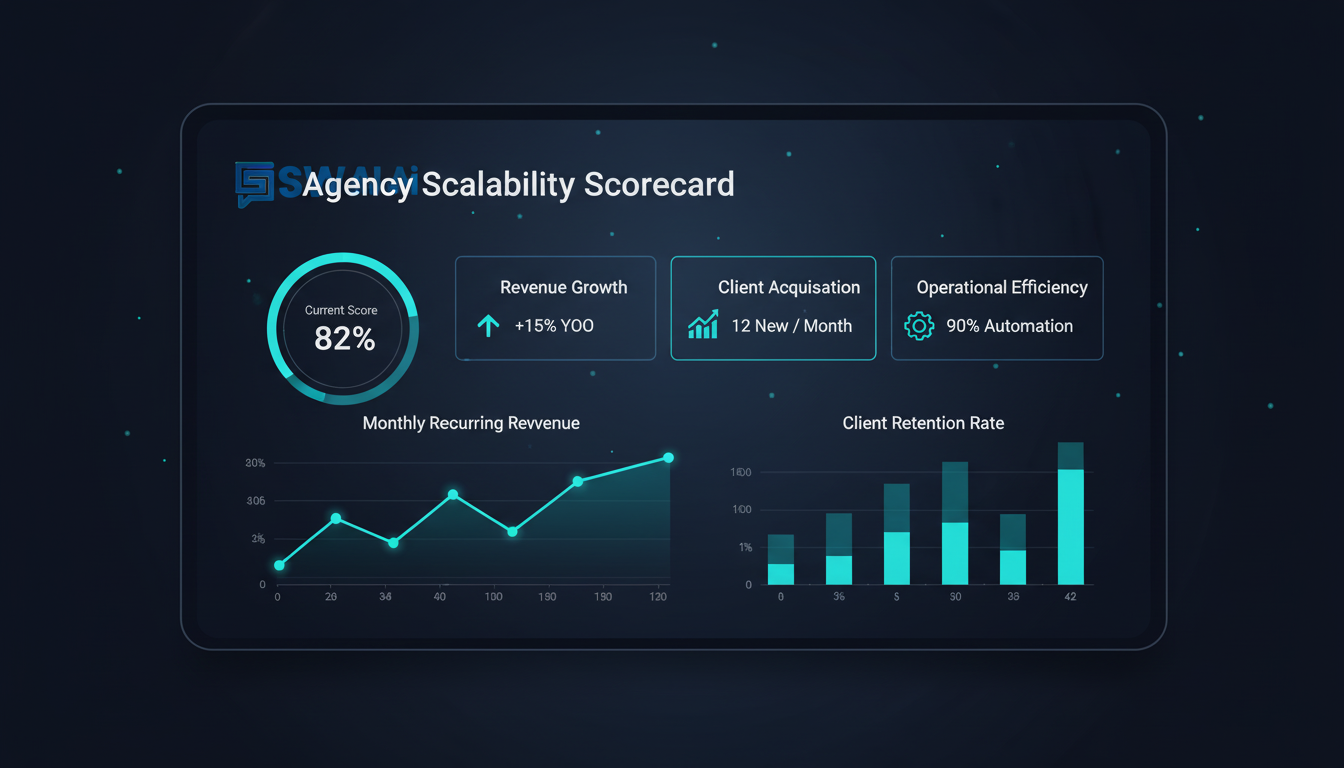
As an agency owner, you're driven by growth. But do you truly know where your operations are secretly bleeding time, money, and opportunity? You might be hitting your revenue targets, but if your processes are held together by manual effort and a patchwork of tools, you're not scaling—you're just getting bigger. It's time to look beyond the surface-level numbers and uncover the real metrics that dictate your growth potential. This is where the Agency Scalability Scorecard comes in.
Why Standard KPIs Aren't Enough
Monthly Recurring Revenue (MRR), Customer Acquisition Cost (CAC), and Client Lifetime Value (CLV) are vital signs for your agency's health, but they are lagging indicators. They tell you the result of your past efforts, not the efficiency of your current operations. They don't reveal the friction in your client onboarding, the hours wasted on manual reporting, or the valuable leads slipping through the cracks. Relying on these metrics alone is like driving a car by only looking in the rearview mirror. To build a truly scalable agency, you need to measure the underlying infrastructure—the engine itself—to identify and eliminate the bottlenecks that are holding you back.
Metric 1: Client Onboarding Velocity
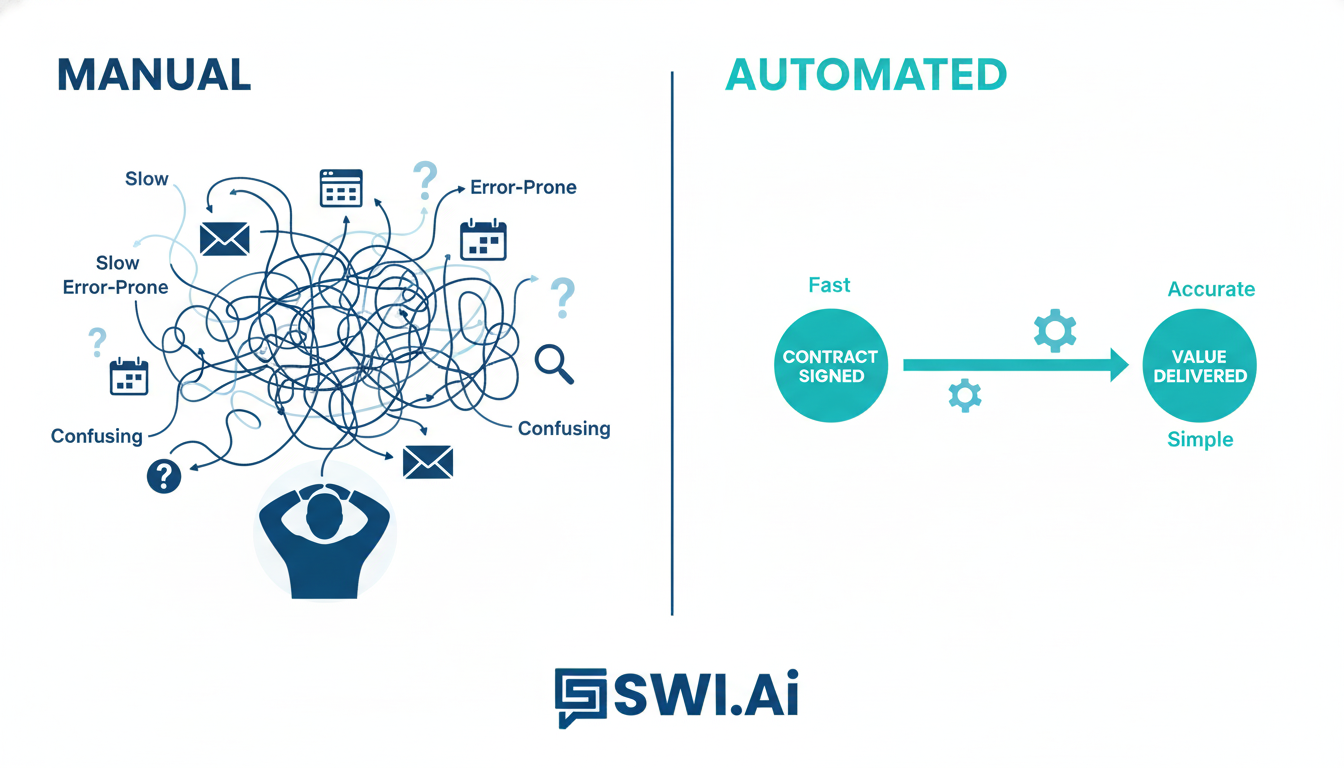
How long does it take from the moment a client signs the contract to the moment they are fully onboarded and seeing value? This is your Client Onboarding Velocity. A slow, manual process filled with spreadsheets, endless email chains, and repetitive data entry not only creates a poor first impression but also delays your time-to-value. Every day of delay is a day the client isn't getting results, which increases the risk of churn. Contrast this with a fully automated, seamless process where a signed contract triggers a cascade of autonomous actions—project setup, team assignment, and kickoff communications. A high velocity here means happier clients, faster results, and a more efficient team.
Metric 2: Manual Reporting Overhead
Let's do some quick math. If your team spends just 5 hours per client per month on manually pulling data, creating spreadsheets, and building reports, and you have 20 clients, that’s 100 hours of skilled labor spent on a low-value, repetitive task every single month. That's time that could be reinvested into strategy, client relationships, or innovation. Manual reporting is a significant operational drag that is often overlooked. The alternative is an autonomous system with real-time dashboards that are always on and always accurate. This not only frees up immense amounts of time but also provides clients with the transparency they crave, strengthening your partnership.
Metric 3: Lead Nurturing Gaps
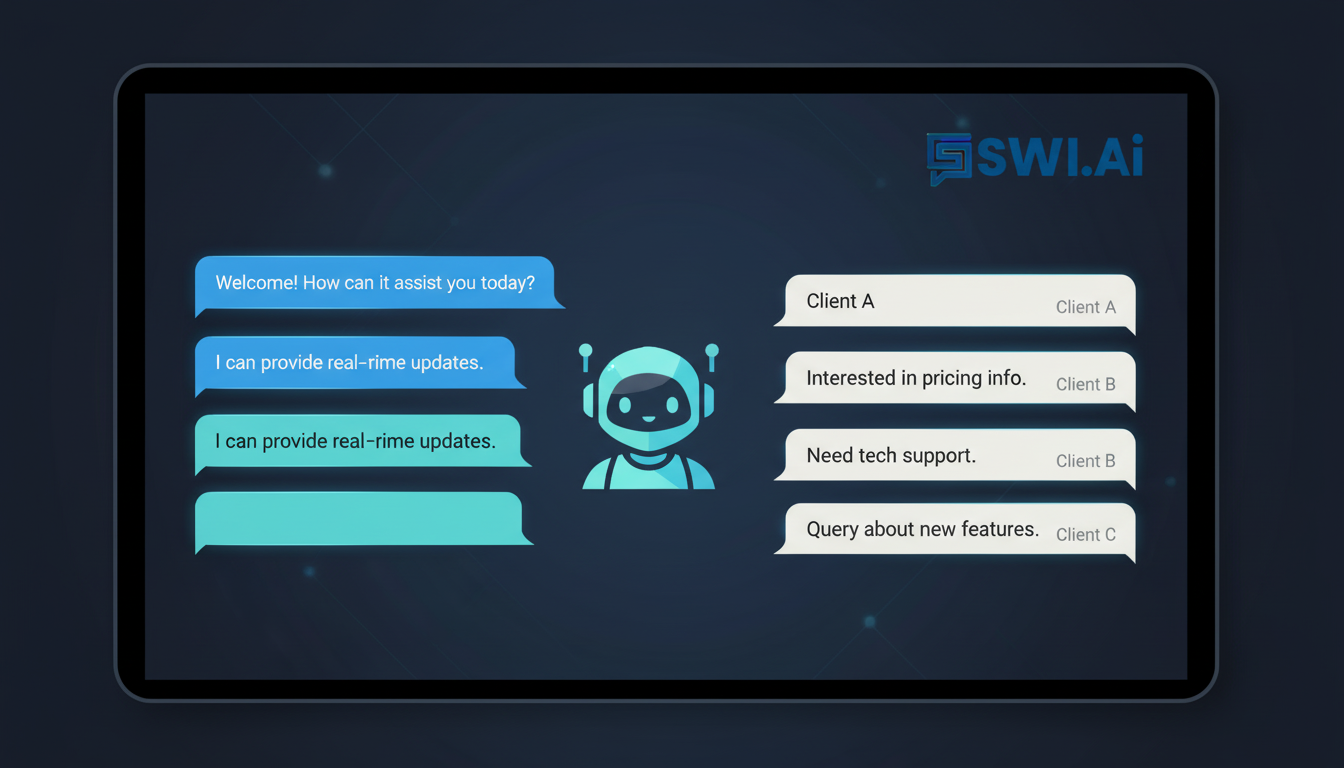
Every agency has them: leads that showed interest, maybe even had a discovery call, but then went cold. In most cases, they don't go cold because they aren't a good fit; they go cold because of inconsistent, manual follow-up. A busy team can easily let a promising lead slip through the cracks. This is a critical scalability failure. An AI-powered sales agent, however, never forgets. It can engage leads 24/7, answer their questions instantly, and nurture them with perfectly timed information until they are ready to talk to a human. By closing these nurturing gaps, you ensure that every bit of marketing spend is maximized and no potential client is left behind.
Metric 4: Tech Stack Fragmentation Score
How many different, disconnected software tools does your team rely on to manage the entire client lifecycle? From your CRM and email marketing platform to your project management software and reporting tools, each one represents a potential point of failure. This fragmentation creates data silos, requires costly and brittle integrations (the infamous 'Zapier tax'), and forces your team to constantly switch contexts. The hidden costs of managing a fragmented stack are enormous. A low fragmentation score, achieved through a unified, self-correcting infrastructure, eliminates these issues. It creates a single source of truth and a seamless operational flow, which is the bedrock of true scalability.
Conclusion: Your Score is a Roadmap
Calculating your agency's performance on these four metrics gives you more than just a score; it gives you a roadmap. It shines a light on the specific operational cracks where your growth potential is leaking out. Understanding that you have a 3-week onboarding process or that your team is spending 100 hours a month on reporting isn't a sign of failure—it's the first, most critical step toward building a truly operator-less system. Knowing your bottlenecks is the only way you can begin to eliminate them and install a true growth engine.
Ready to transform your score from a liability into a structural advantage? Your current bottlenecks are solvable, and you don't have to rebuild your agency from scratch to fix them. Join our free weekly masterclass where we provide a deep-dive into autonomous solutions for each of these critical metrics. We'll show you exactly how to automate onboarding, eliminate reporting overhead, and build a unified growth infrastructure that allows your agency to scale effortlessly. Reserve your spot and start building your roadmap to operator-less growth.
