Your Agency Tech Stack is Broken: Consolidation vs. True Integration
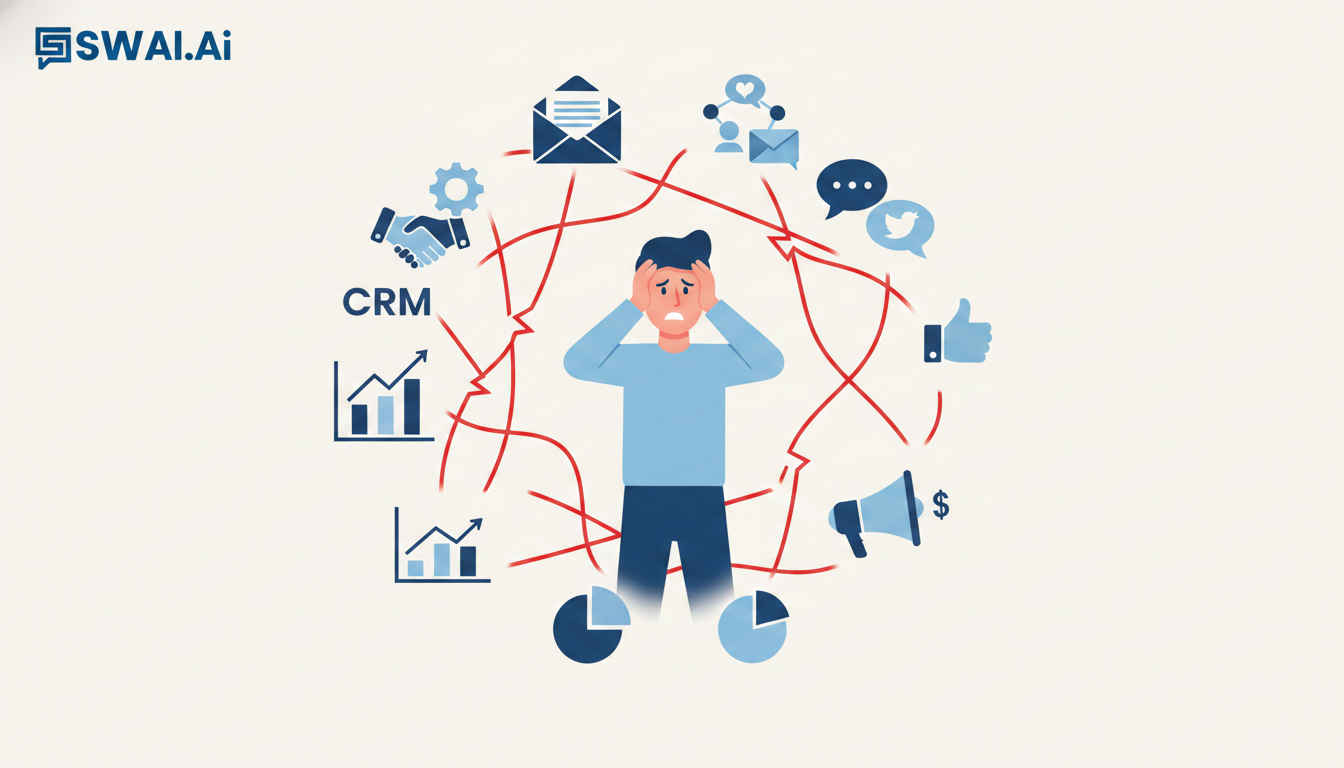
If you're running a digital marketing agency, your software toolkit probably looks less like a well-oiled machine and more like a chaotic science experiment. The average agency juggles a dozen or more SaaS tools—one for social scheduling, another for email, a separate CRM, analytics platforms, ad managers, and a web of connectors to hold it all together. This setup is sold on the promise of 'best-in-class' functionality for each task, but in reality, it creates a fragmented system that quietly bleeds time, money, and your team's sanity.
The Problem with a Fragmented Stack
The cracks in a patched-together tech stack appear quickly. Each platform becomes its own island of information, creating deep-seated operational problems that hinder growth. You end up with critical data silos, where your client information in the CRM doesn't sync with your email marketing platform, and neither gives you a clear view of the ad campaign data. This forces you to make decisions with an incomplete picture of the customer journey.
To bridge these gaps, you rely on third-party connectors like Zapier. But these are just brittle bridges, not a solid foundation. When one app updates its API, your automations break, and you're left scrambling to fix a workflow you thought was 'set and forget.' Beyond the technical headaches, there's the financial drain of ever-increasing subscription costs. But the biggest hidden expense is the 'management tax'—the salary you pay an operator whose primary job is to manually glue the whole system together, troubleshoot errors, and coordinate between platforms. This human dependency is the single biggest bottleneck to scaling your agency.
The Myth of 'All-in-One' Platforms
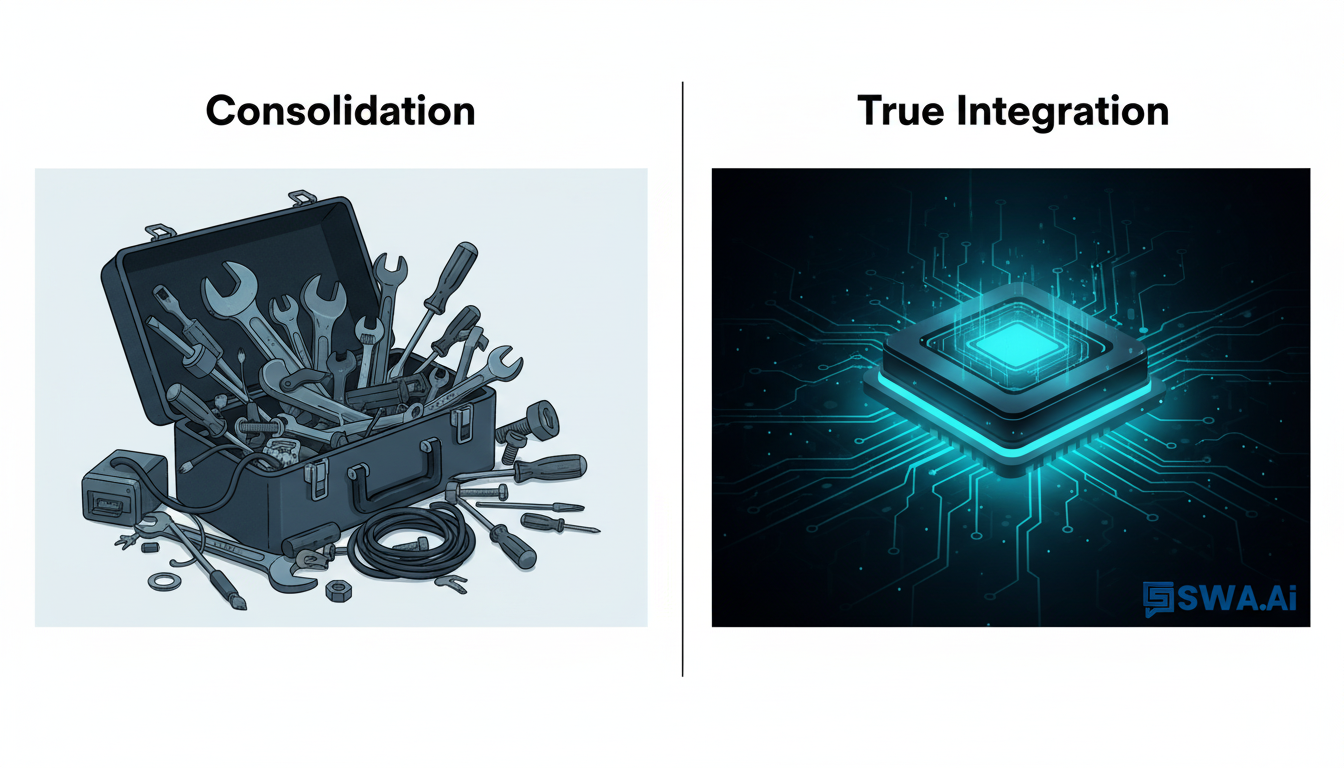
Recognizing the chaos, many agencies turn to 'all-in-one' platforms, hoping to find a simple solution. These platforms promise to consolidate your CRM, email, landing pages, and more under a single subscription. While this can reduce the number of invoices you pay, it rarely solves the core problem. There's a fundamental difference between consolidation and true integration.
Consolidation is like buying a pre-packaged toolbox; you get a hammer, a screwdriver, and a wrench from the same brand, but they are still separate tools. You, the operator, still have to pick up each one and decide how to use them together. Similarly, many all-in-one suites are just a bundle of features acquired over time and loosely stitched together. The 'CRM module' and the 'email module' may not share the same underlying data structure, leading to the same old syncing issues and operational friction, just under a different logo.
The Power of a Self-Correcting Infrastructure
True integration isn't about having fewer logos in your tech stack; it's about having a single, unified infrastructure built from the ground up to operate as one entity. This is the shift from organized labor to intelligent infrastructure. An AI-native system doesn't just connect tools; it is the tool. Every component—from traffic activation and landing page generation to email logic and sales engagement—is part of a cohesive whole.
This creates a self-correcting infrastructure that operates autonomously. Imagine a system where the AI notices an ad campaign is driving low-quality leads, so it adjusts targeting in real-time. Or where it analyzes email engagement and rewrites sequences on the fly to improve open rates. When traffic, leads, sales, and reporting function as a single, intelligent organism, the need for a human operator to coordinate and fix things disappears. This isn't just an improvement; it's a structural advantage that allows your agency to operate at AI-speed, delivering better results faster and at a lower cost.
Conclusion
The constant cycle of adding tools, patching funnels, and managing a fragile tech stack is holding your agency back. The incremental improvements offered by consolidated platforms are no longer enough to compete. The future of agency growth doesn't lie in better organization of labor; it lies in replacing fragmented systems with a truly autonomous, AI-native infrastructure.
It's time to stop wasting your resources patching a broken model. Instead of just managing growth, it's time to install a dedicated growth engine. To show you exactly what this new standard looks like, we are building a complete agency growth engine from scratch, live. Join the live build this Tuesday and see how an operator-less infrastructure can transform your agency's efficiency and scalability.
