The Agency Scalability Paradox: How to Add Clients Without Adding Overhead
Introduction: The Agency Scalability Paradox
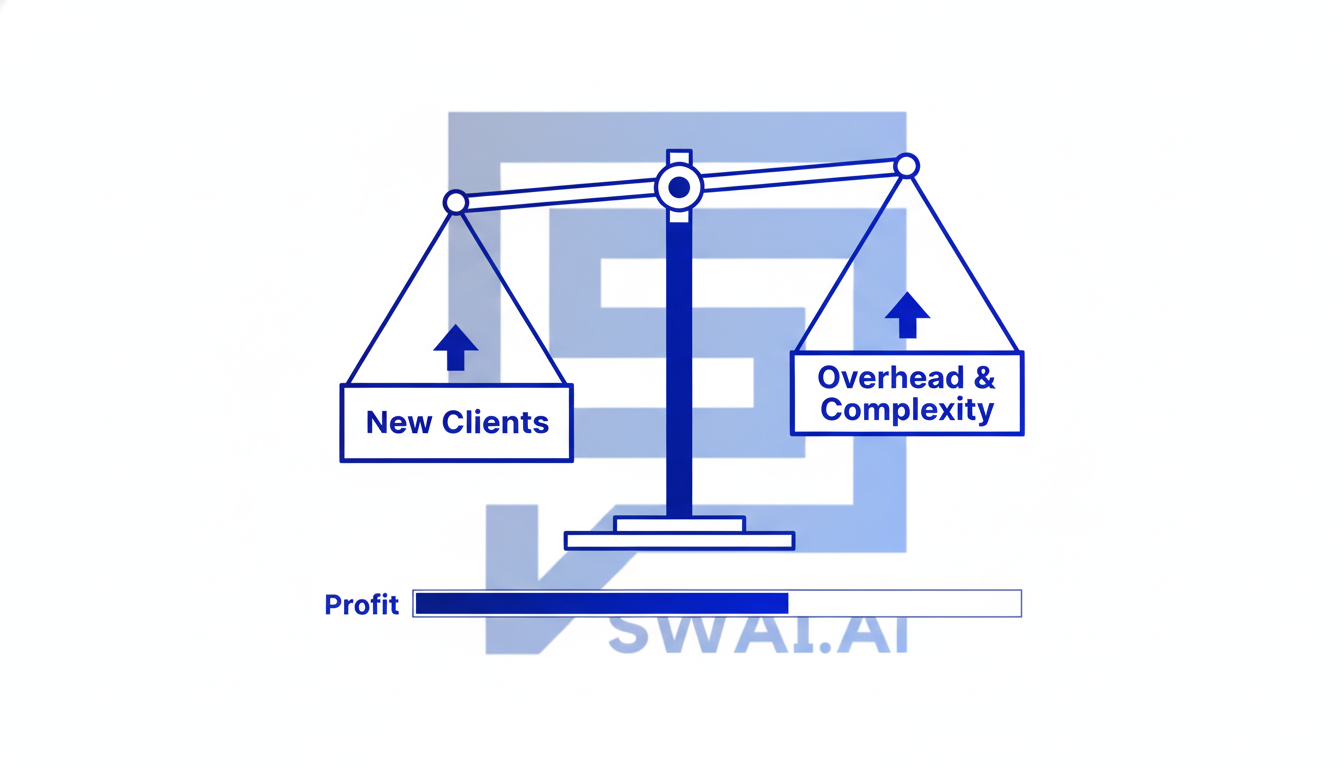
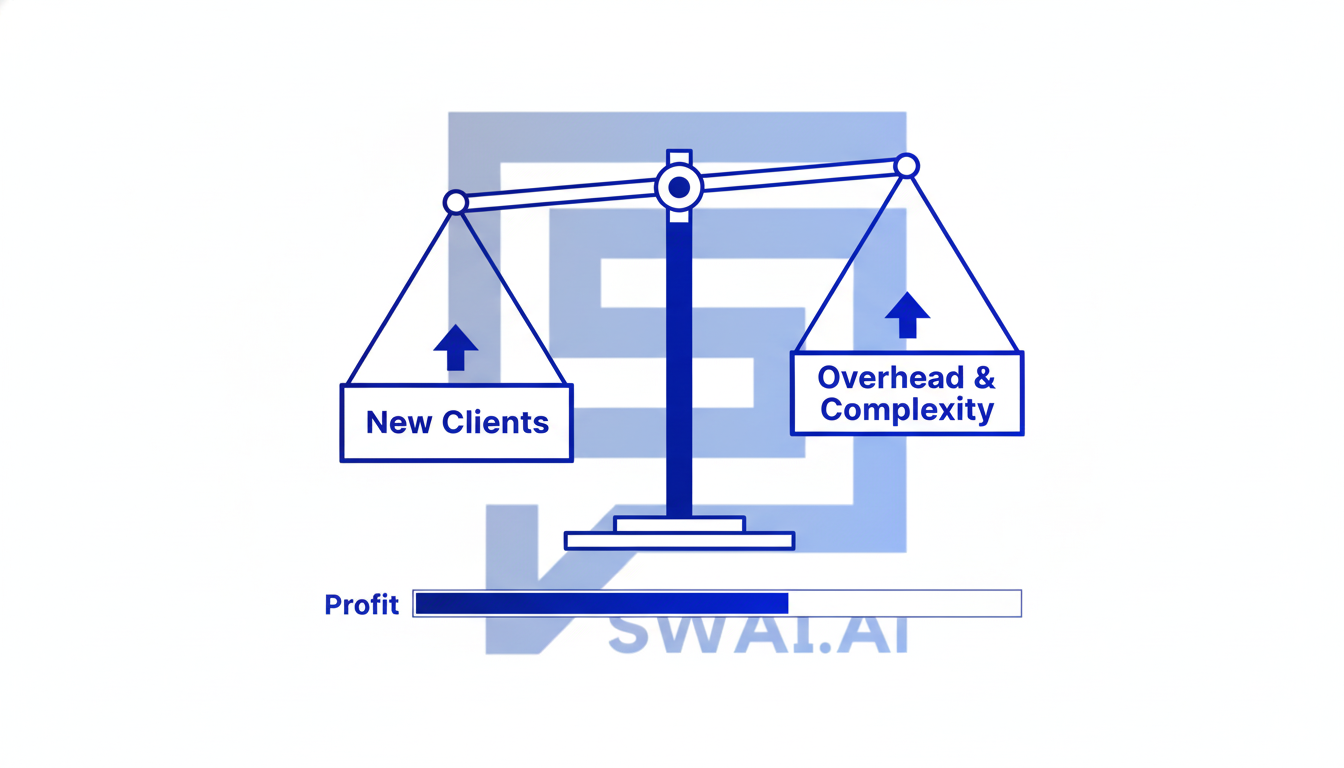
For any ambitious agency owner, landing a new client is a moment of triumph. But what comes next is often a familiar, frustrating cycle: the frantic onboarding, the need for more staff, the added cost of another software seat, and the creeping realization that your profit margin isn't actually growing. This is the Agency Scalability Paradox. It's the point where your growth in revenue is directly tethered to an equal, if not greater, growth in operational costs and complexity. Instead of scaling, your agency is simply getting bigger, busier, and more bloated, with profits remaining stubbornly flat. If you feel like you're running faster just to stay in the same place, you're not alone—you're trapped in a broken model.
The Root Cause: Why Linear Growth Models Fail
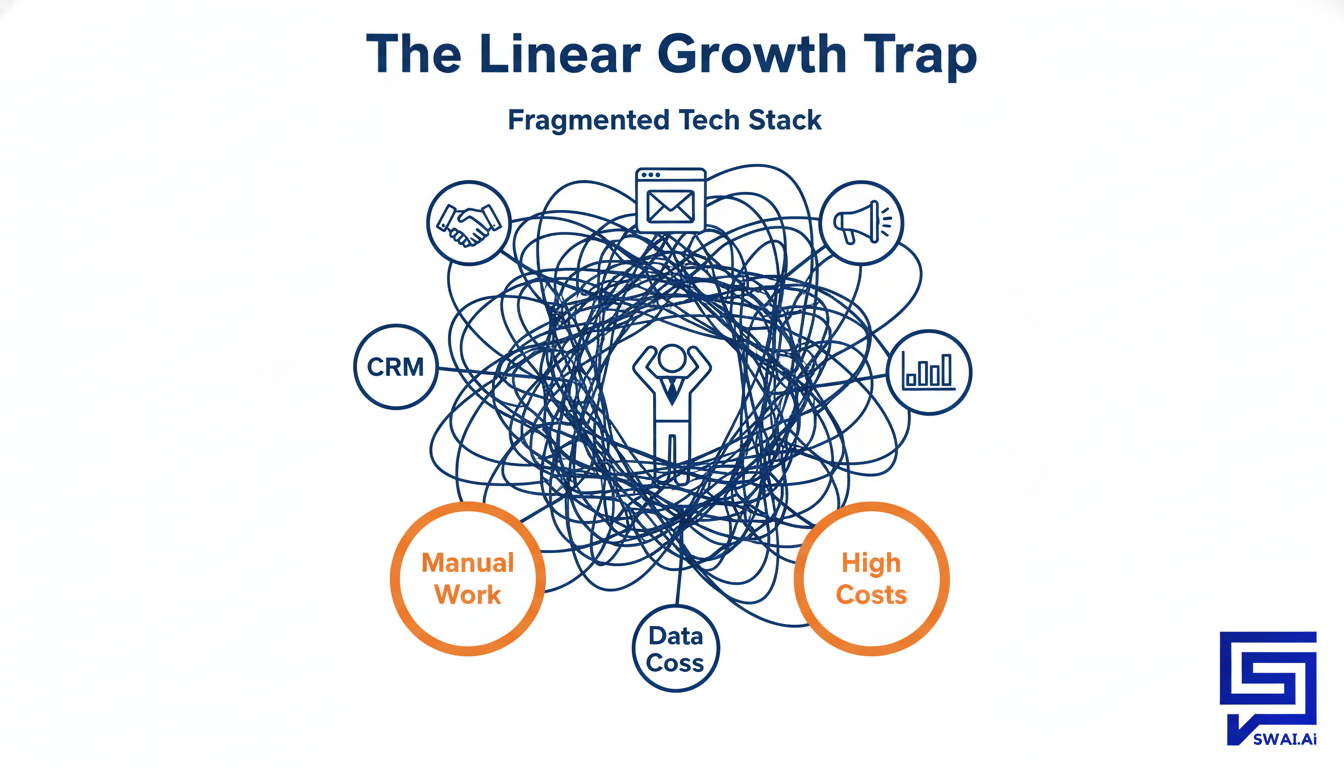
The traditional agency model was built for a different era. It operates on a linear equation where revenue is a direct product of billable hours and a patchwork of specialized tools. Every new client requires a slice of your team's time and a new seat in your CRM, your email marketing platform, your project management software, and your ad management tools. This fragmented 'tool-stack' approach isn't just expensive; it's a drag on efficiency. Your team spends countless hours manually integrating systems, debugging broken connections, and wrestling with data silos instead of delivering strategic value. Hiring more people to manage this chaos is a temporary fix, not a solution. You're not solving a personnel problem; you're trying to patch a fundamental systems problem with more overhead, which only leads to diminishing returns and eroding margins.
The Solution: Decoupling Revenue from Overhead with an AI OS
To break the paradox, you must break the linear model. The solution lies in decoupling your revenue potential from your operational overhead. This is precisely what an AI-Native Revenue Operating System (OS) is designed to do. Unlike an 'AI-integrated' tool that just adds another layer to your existing stack, an AI OS replaces it entirely. It's a unified, autonomous platform that can manage and execute end-to-end campaigns—from building landing pages and generating ad copy to optimizing bids and nurturing leads—without human intervention. Imagine a system that can handle ten clients as easily as it handles one hundred, where the core operational cost remains flat. This allows your revenue to grow exponentially while your overhead stays locked in place. You're no longer adding costs with each new client; you're adding pure profit.

A Financial Case Study: Agency A (Traditional) vs. Agency B (AI-Native)
A numbers-driven comparison makes the difference startlingly clear.
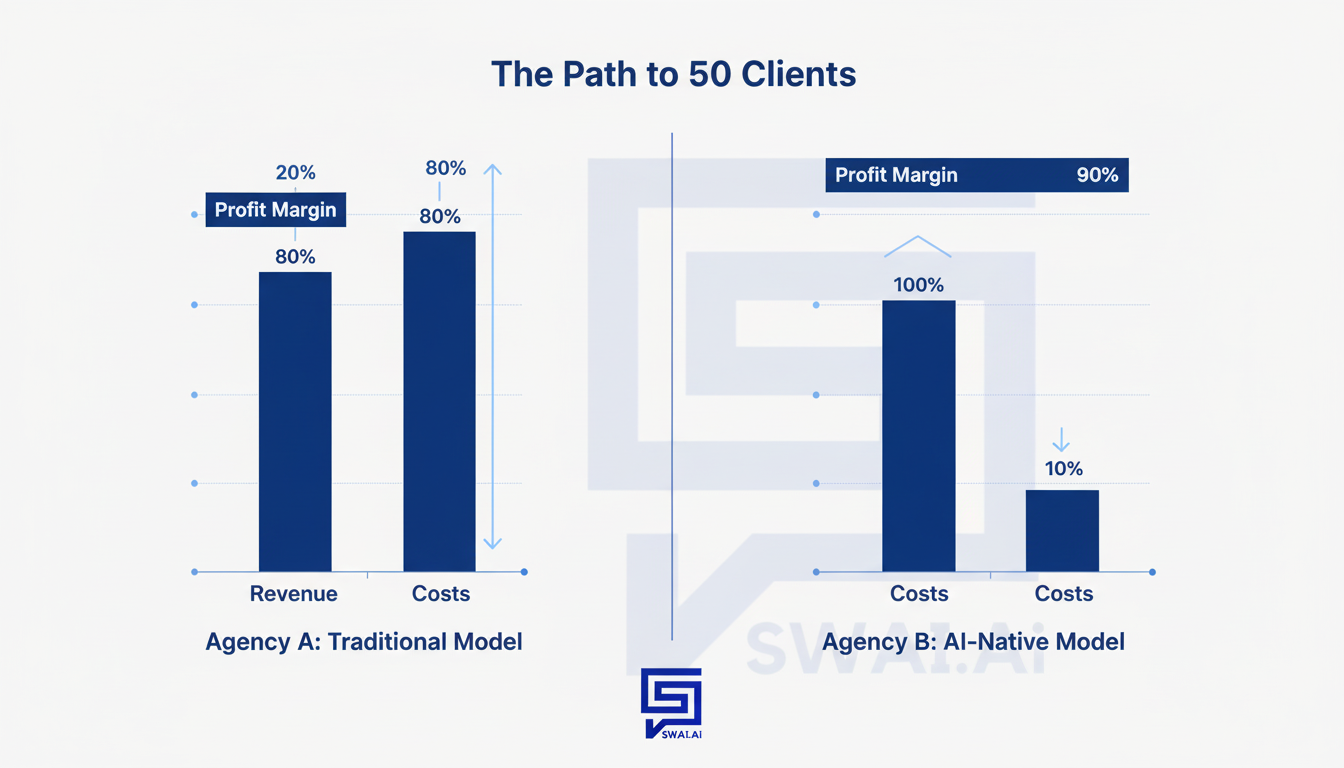
Agency A (The Old Way) starts with 10 clients and a team of five. After paying salaries and a dozen software subscriptions, they achieve a respectable 20% profit margin. To scale to 50 clients, they must hire 15 more people and multiply their software seats. Their revenue grows 5x, but their overhead grows 4.5x. The result? A profit margin that inches up to just 22%, along with a massive increase in management complexity.
Agency B (The SWAI.ai Way) also starts with 10 clients but runs on a single AI Revenue OS. Their operational costs are a fraction of Agency A's, thanks to 8x cheaper operations, giving them an immediate 60% profit margin. When they scale to 50 clients, their revenue grows 5x, but their core operational cost—the AI OS—remains the same. Their profit margin skyrockets, and they achieve this growth without adding a single new hire for fulfillment.
The financial impact is not just an improvement; it's a complete transformation of the business model.
Conclusion: Your New Operating Model Awaits
True agency scalability isn't about working harder, hiring faster, or finding a magic-bullet piece of software to add to the pile. It's about fundamentally changing your operating model. The scalability paradox is not an unavoidable law of business; it’s a symptom of an outdated system. By adopting an AI-native foundation, you shift from trading time for money to building a truly scalable asset. You empower your team to focus on high-level strategy and client relationships—the work that truly matters—while the AI handles the execution.
Stop letting overhead dictate your growth potential. It's time to build an agency where adding a new client means adding to your bottom line, not your workload. Discover how SWAI.ai can provide the AI-native foundation for your agency's future and help you build a truly scalable, profitable, and resilient business. Sign up today and break free from the paradox.
