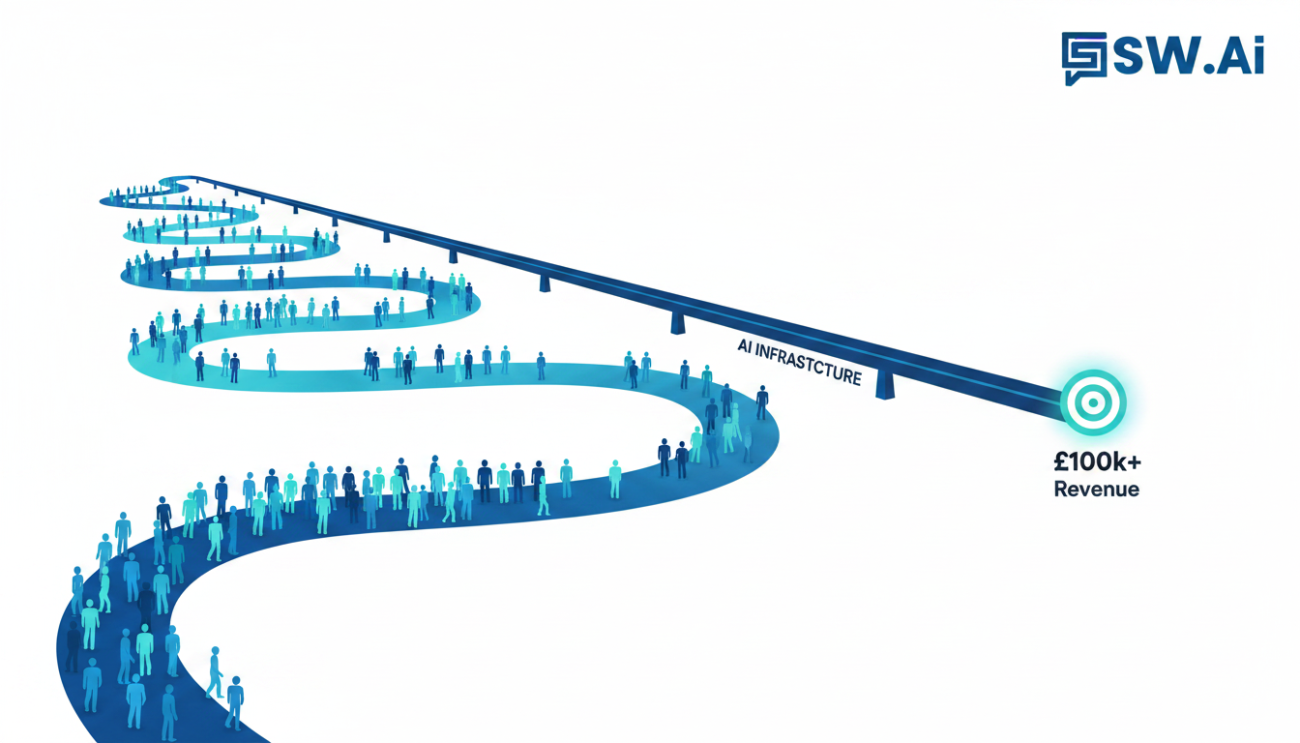
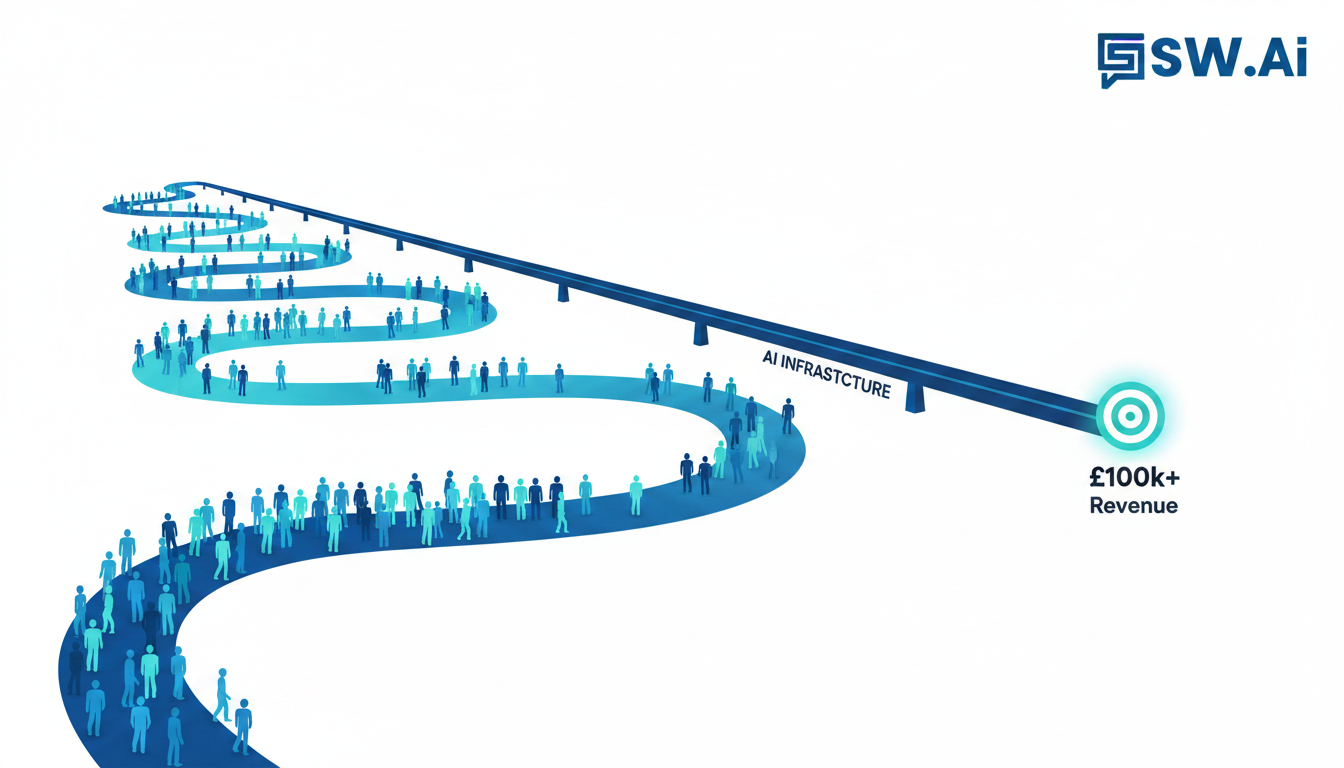
How to Add £100k in New Agency Revenue Without Increasing Your Headcount
Is your agency's growth plan just a hiring plan? For years, the conventional wisdom has been that scaling revenue requires scaling your team. More clients mean more account managers, more leads require more sales reps, and more marketing demands more assistants. But what if this model is fundamentally broken? The path to exponential growth isn't paved with more salaries and overheads; it's built on superior infrastructure. Making the strategic choice to upgrade your operational engine, rather than just adding more human cogs to the machine, is the single most important decision a modern agency founder can make.
Step 1: Automate Your Entire Top-of-Funnel
The first bottleneck to growth is always the top of the funnel: generating awareness and capturing leads consistently. Traditionally, this involves a marketing assistant or a junior team member manually building landing pages, managing ad spend across multiple channels, and ensuring leads are captured correctly. This process is slow, prone to error, and stops the moment your team clocks out. Imagine instead an AI-native system that builds high-converting pages in minutes, autonomously activates and optimizes traffic across channels like LinkedIn, and captures every single lead, 24/7. This isn't just automation; it's an operator-less engine that fuels your pipeline while your team focuses on high-value strategic work.
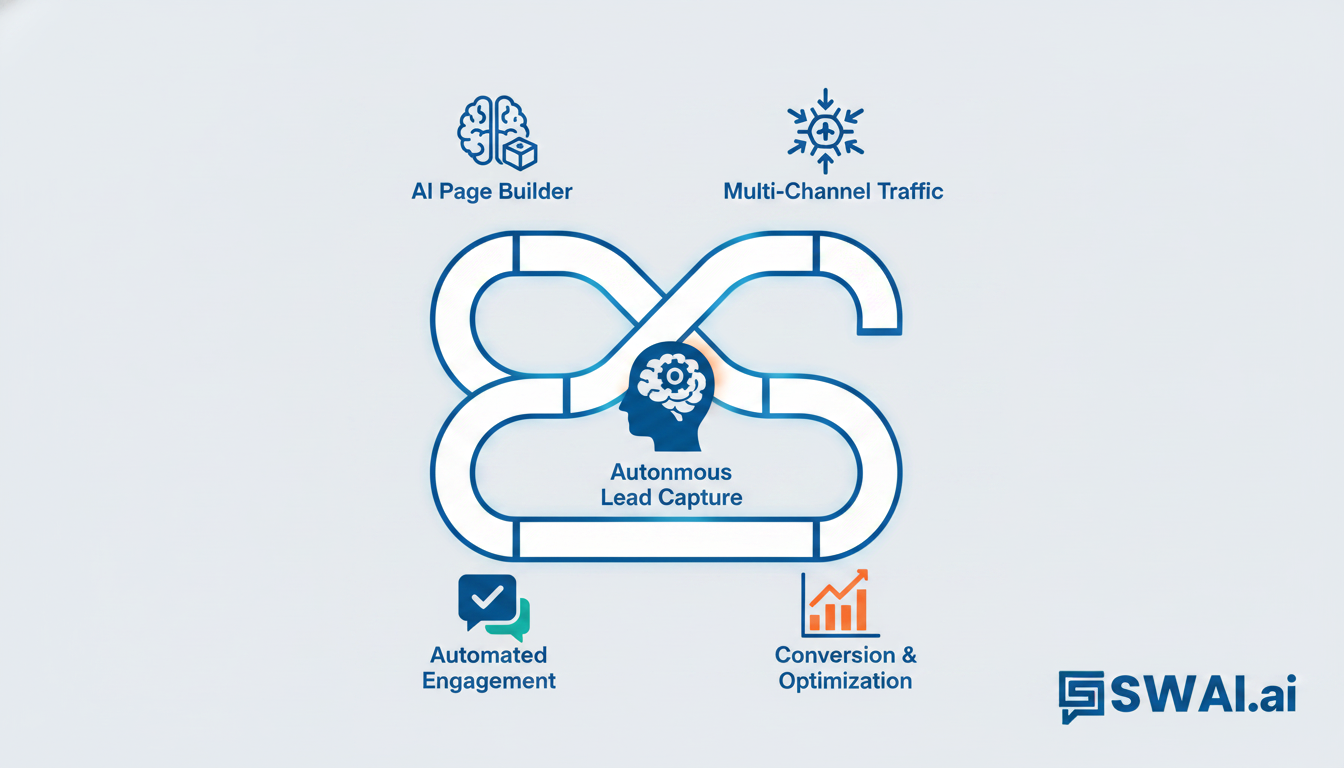
Step 2: Deploy an AI Sales Agent
Once a lead is captured, speed is everything. A potential client's interest is highest in the first five minutes, yet most agencies take hours or even days to respond. This is where the second major growth constraint appears: the need for a sales development team to qualify, nurture, and book meetings. An AI Sales Agent eliminates this bottleneck entirely. It engages leads instantly via chat or email, asks intelligent qualifying questions based on their profile, nurtures them with relevant information, and books qualified meetings directly into your senior team's calendar. It works tirelessly, handling hundreds of conversations simultaneously without ever getting tired or dropping the ball, effectively replacing the need for an entire junior sales team.
Step 3: Implement a Self-Correcting CRM
Most CRMs are little more than digital filing cabinets—passive databases that require a sales manager to manually analyze data, identify bottlenecks, and dictate strategy. This is a reactive approach that drains management time and misses real-time opportunities. A self-correcting, autonomous CRM is fundamentally different. It's an active intelligence layer that analyzes your entire sales pipeline in real-time. It identifies which leads are most likely to close, pinpoints friction points in your process, and dynamically adjusts outreach and follow-up sequences to maximize conversion rates. This system doesn't just store data; it optimizes your entire revenue operation without a human manager constantly pulling reports and making manual adjustments.

The Math of Operator-Less Growth
Let's break down the financial impact. The traditional approach requires significant investment in salaries and associated costs. A junior marketing assistant might cost your agency £30,000 per year, while a sales development rep could be £40,000 or more, not including overheads, training, and management time. Add the cost of a fragmented software stack—your CRM, landing page builder, email marketing tool—and you're easily looking at over £75,000 in annual operational drag before you've even signed a new client.
By replacing this organized labor with a unified, self-correcting infrastructure, you eliminate those costs entirely. That £75,000+ is pure profit. Now, factor in the revenue upside: more leads captured, higher conversion rates from instant engagement, and an optimized sales process that closes more deals. Surpassing an additional £100,000 in net revenue isn't just possible; it's the logical outcome of a superior operational model.
Conclusion
Shifting from a human-powered agency to one driven by an operator-less growth engine is no longer a futuristic theory. It is the new operational reality for agencies that want to achieve scalable, profitable growth. The choice is simple: continue patching your funnel with more people, or install a true growth engine that delivers a structural advantage. This is the exact infrastructure we build for our clients, transforming their operations and unlocking their true potential. To see how this AI-Native Revenue OS is assembled from the ground up, step-by-step, we invite you to see it in action.
