Fragmented Tools vs. a Unified Growth Engine: The Real Cost to Your Agency
Introduction
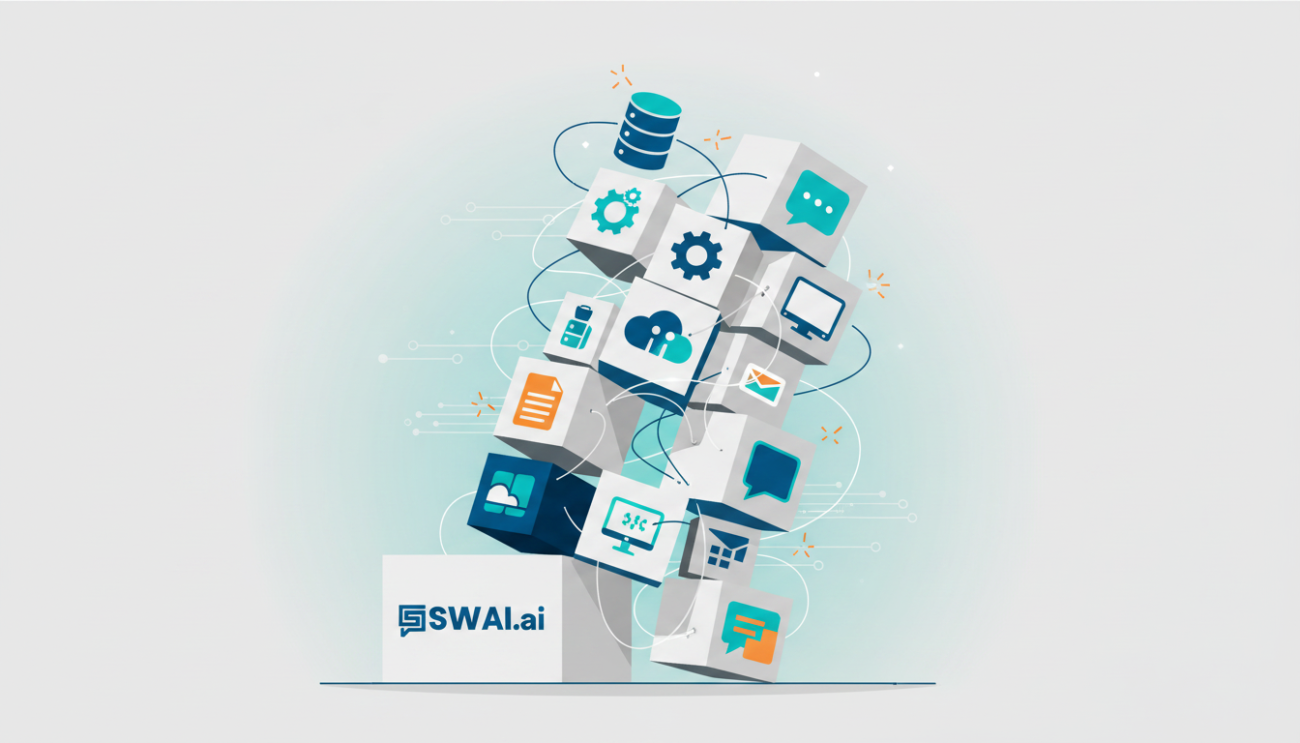
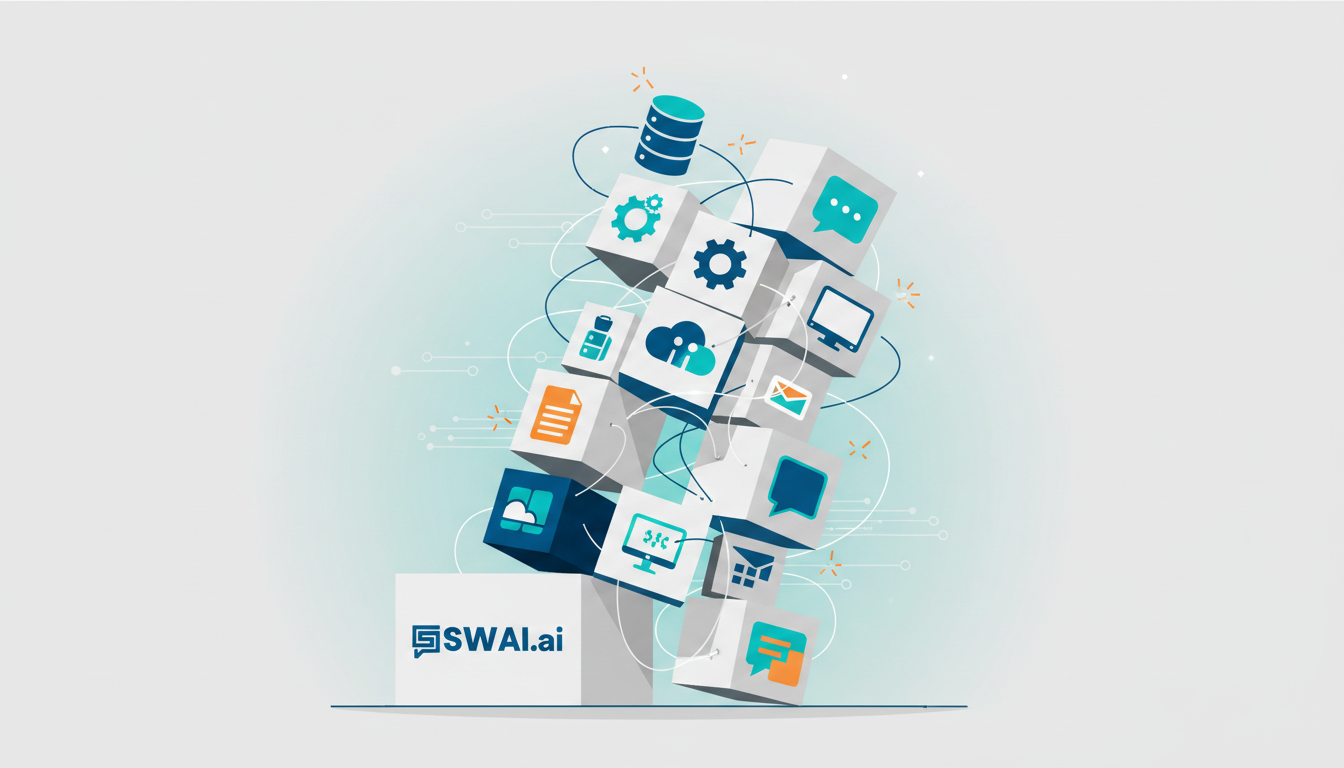
In the world of digital marketing agencies, there's a common beast lurking in the server rooms and cloud accounts of even the most successful firms. It’s often called the 'Frankenstack'—a sprawling, stitched-together collection of marketing and sales tools. It starts with good intentions: a best-in-class email platform here, a top-tier CRM there, a powerful landing page builder, a handful of analytics tools, and a web of Zapier connections holding it all together. The promise is synergy, but the reality is a complex, fragile ecosystem that consumes more resources than it creates.
The Hidden Costs of a Fragmented Stack
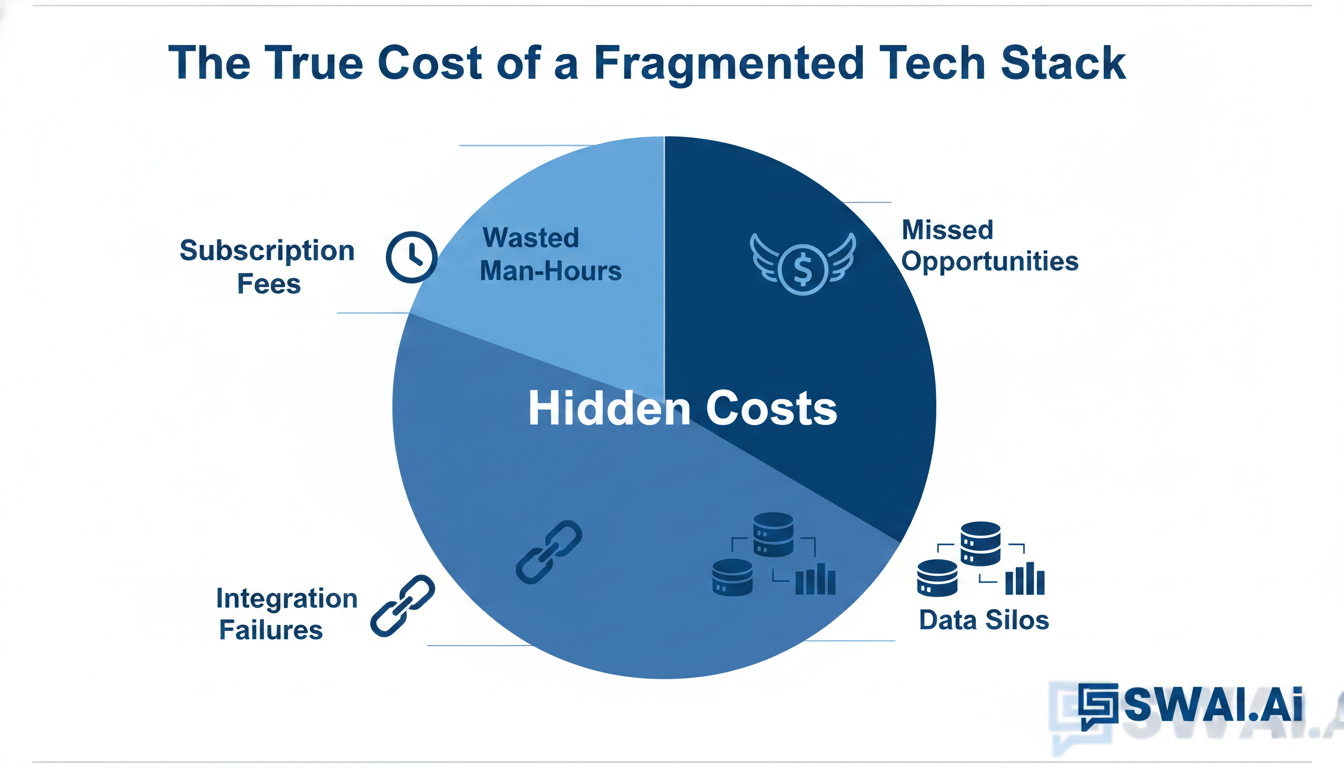
When calculating the cost of your tech stack, it’s easy to just add up the monthly subscription fees. But that figure is deceptively small. The real cost of a fragmented system lies in the operational drag it creates. It's the hours your team spends manually exporting and importing CSVs because a native integration failed. It's the data silos that prevent you from getting a clear, single view of a customer's journey, leading to misinformed strategy. It's the compounding cost of wasted human effort—the time spent managing tools instead of delivering client value. Every broken automation is a potential lead lost, and every hour spent troubleshooting is an hour not spent on growth. These are the expensive, invisible invoices that your Frankenstack bills you for every single day.
What is a True Growth Engine?
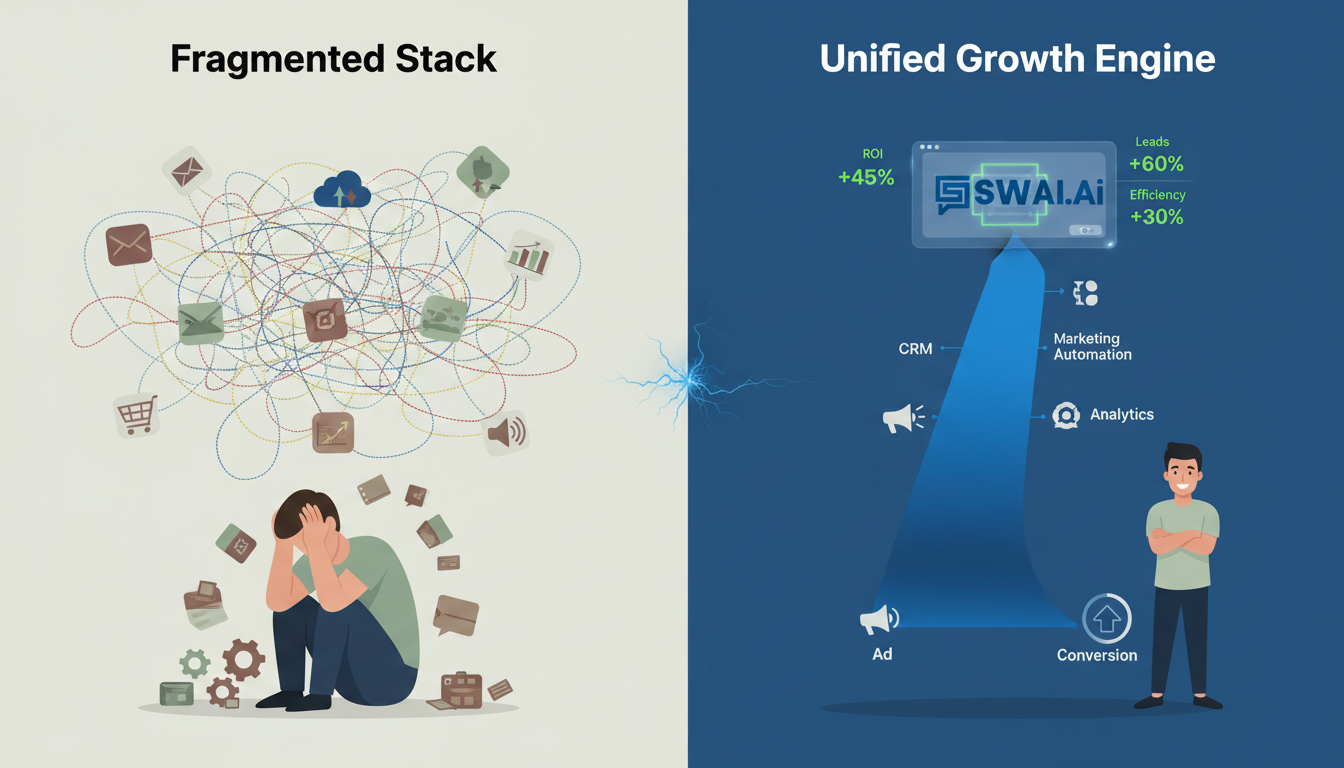
Contrast the Frankenstack with a true growth engine. This isn't just a well-curated bundle of apps; it’s a single, unified, AI-native infrastructure built from the ground up for one purpose: to autonomously run and optimize the entire customer journey. Instead of relying on human operators to coordinate between disparate systems, an autonomous growth engine acts as a self-correcting organism. It builds its own pages, activates traffic, runs email logic, and manages the CRM without manual intervention. It's a fundamental shift from using tools to deploying an infrastructure—an AI-Native Revenue OS that eliminates the friction and human bottlenecks inherent in a fragmented stack.
A Side-by-Side Comparison
Let's trace a typical client journey to see the difference in action.
With a fragmented stack, generating a lead involves a landing page builder, a separate form tool, an email marketing platform for the autoresponder, and a CRM that hopefully receives the data correctly via a third-party connector. An operator has to check that each step is working, and if anything breaks, the lead is lost in the digital ether.
With an autonomous engine, the process is seamless. The AI builds the page, the form is native, the email logic is integrated, and the lead is instantly placed and managed within the autonomous CRM. The system monitors itself, ensuring the entire journey from first click to conversion is executed flawlessly.
Case-in-Point: The ROI of Consolidation
Moving to a single infrastructure isn't just about cutting subscription costs or saving time on manual tasks. It's about creating a structural advantage. When your agency's operations move at the speed of AI, you can deliver results for clients faster, iterate on campaigns in real-time, and scale your service delivery without proportionally increasing your headcount. This 'AI-speed' advantage is impossible to achieve when your team is bogged down by the friction of a fragmented stack. Consolidation unlocks a new level of efficiency and performance, turning your agency from a service provider into a high-velocity growth partner for your clients.
Conclusion
For too long, agency owners have been forced to act as systems integrators, spending their valuable time patching a leaky funnel instead of focusing on strategy and growth. It's time to stop organizing labor around broken systems and start deploying intelligent infrastructure. Instead of adding another tool to your Frankenstack, consider installing a true growth engine. See exactly how this self-correcting infrastructure can replace your entire marketing and sales stack and give your agency a decisive competitive edge. Join our live build this Tuesday and witness the future of agency operations firsthand.
