The Agency Scalability Scorecard: 7 Questions Every UK Founder Must Ask
Introduction: Growth isn't just about getting more clients; it's about your capacity to serve them profitably. How scalable is your agency, really?
For ambitious agency founders across the UK, growth is the ultimate goal. But true scalability isn't measured by headcount or a flashy client list. It's measured by your agency's underlying infrastructure—its ability to grow revenue exponentially without a linear increase in costs or complexity. Many agencies hit a ceiling not because of a lack of opportunities, but because their operational foundation is built on manual processes and fragmented systems. This scorecard is designed to be a harsh but necessary diagnostic tool. Ask yourself these seven questions honestly to reveal the structural cracks in your growth model before they become catastrophic failures.
Question 1: How much of your client journey, from first click to final report, is truly autonomous?
Think about the entire lifecycle of a client. A lead clicks an ad, fills out a form, gets a follow-up email, is qualified by a sales rep, onboarded by an account manager, and receives monthly performance reports. How many of those steps require manual intervention? Every hand-off, every moment a team member has to copy-paste data from one system to another, is a point of friction and a potential failure. A truly scalable system has a seamless, autonomous flow where data and actions are triggered intelligently, without human bottlenecks, creating a consistent and efficient experience every single time.
Question 2: If your top salesperson quit tomorrow, would your lead-to-close rate collapse?
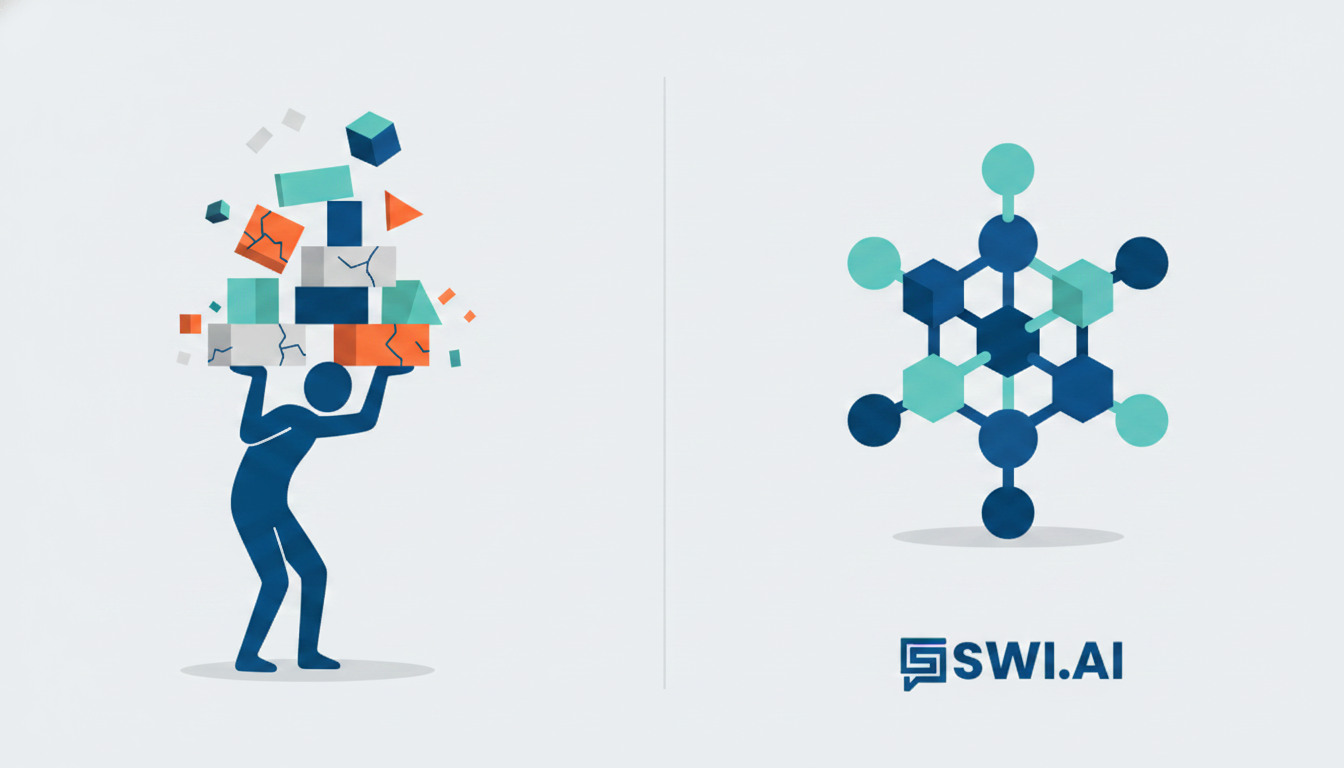
Many agencies are unknowingly reliant on 'hero' employees—that one superstar salesperson who just gets it, or the account manager who holds all the client relationships in their head. This is a massive structural risk. When your agency's success is tied to individual people rather than robust processes, your growth is fragile and unpredictable. A scalable agency builds its success into the infrastructure itself. The system should empower the team, not depend on the heroics of a few key individuals. Your lead generation, nurturing, and closing processes should be so deeply embedded in your operations that they function consistently, regardless of who is at the helm.
Question 3: How many hours does your team spend on manual reporting and data entry each week?
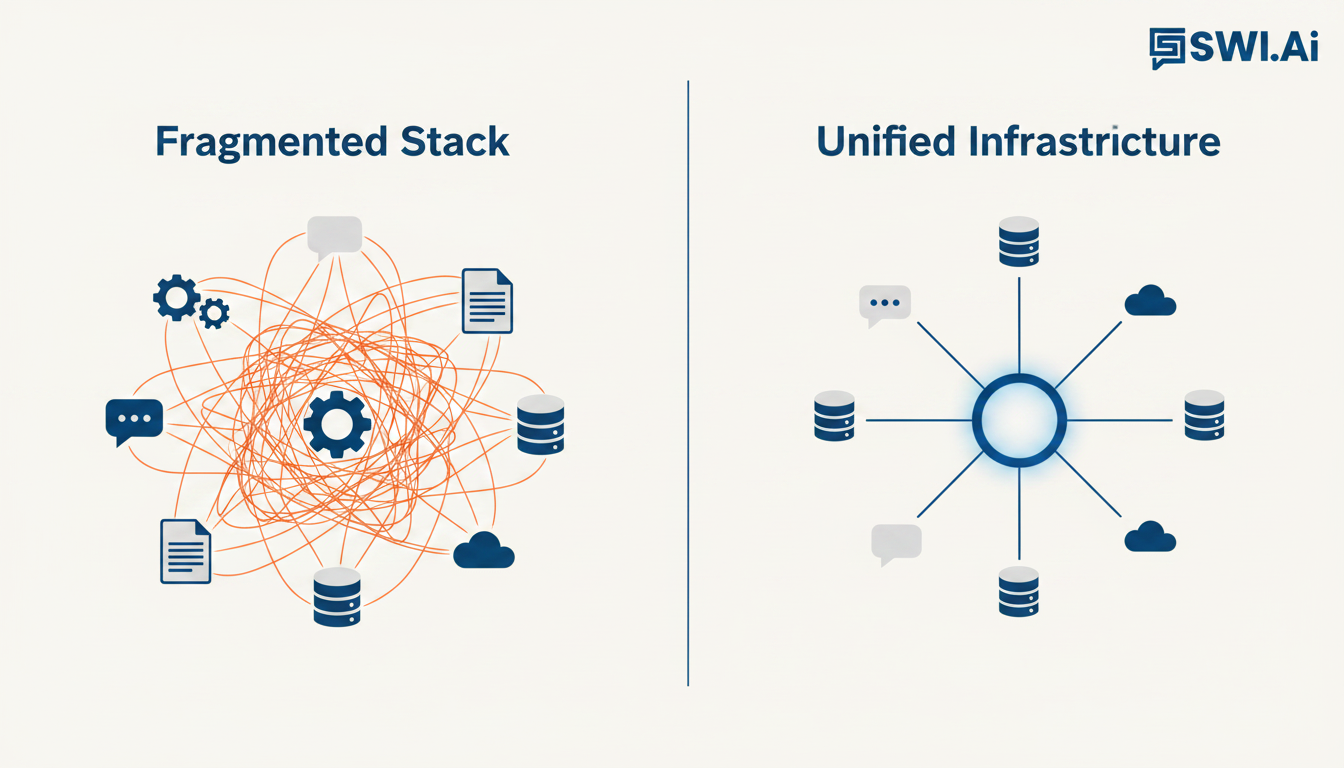
Consider the hidden tax on your agency's profitability: non-billable administrative work. Pulling data from Google Ads, LinkedIn, your CRM, and analytics platforms to manually compile a client report is a time-consuming, error-prone process. This is time your highly-paid specialists could be spending on high-value strategy and execution. This operational drag is a direct consequence of a disconnected system. In a scalable model, data flows into a unified source of truth, and reporting is generated autonomously, providing real-time insights without the manual labour.
Question 4: Does your 'tech stack' operate as a single, self-correcting organism or a collection of disconnected tools?
Most agencies have a 'tech stack' that is actually a 'tech pile'—a collection of disparate software held together by fragile, third-party integrations like Zapier. When one tool updates its API or an integration inevitably breaks, the entire workflow grinds to a halt, requiring manual fixes. This isn't an infrastructure; it's a liability. A truly scalable system operates like a single organism. It's a unified, self-correcting infrastructure where every component works in harmony, data is shared natively, and the system can autonomously optimize its own performance without constant human oversight.
Question 5: Can you accurately predict next month's new business revenue based on today's inputs?
Predictability is the hallmark of a scalable business. Can you confidently say, "If we spend £X on this channel and generate Y leads, we will close Z clients for £W in new revenue next month"? For most agencies, the answer is a hesitant 'maybe'. This uncertainty stems from a chaotic and inconsistent customer journey where leads leak, follow-ups are missed, and data is unreliable. An autonomous growth engine removes this variability. By systemizing the entire journey, you create a predictable pipeline where inputs reliably generate outputs, transforming growth from a guessing game into a science.
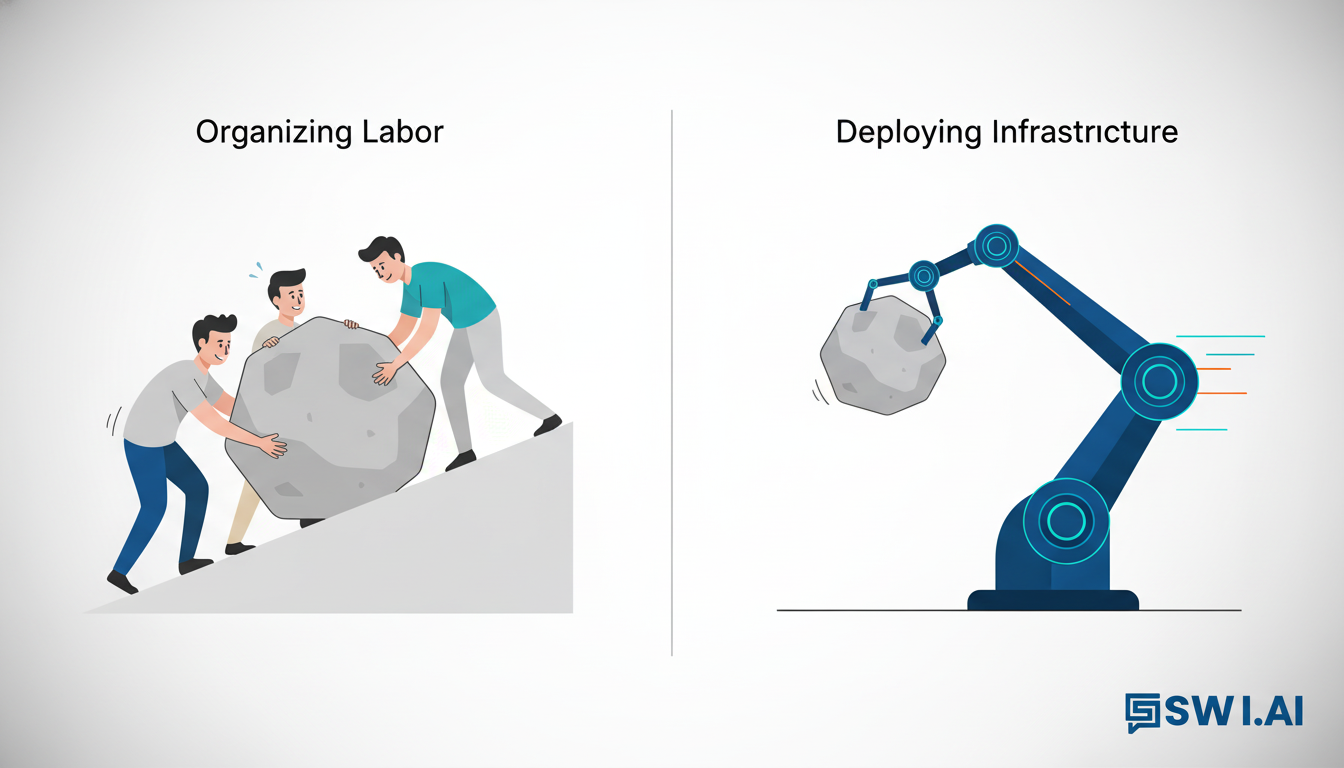
Question 6: Is your growth dependent on organizing labor or deploying infrastructure?
When faced with more work, the default agency response is to hire more people. This is a strategy of organizing labor, and it leads to linear growth where costs scale directly with revenue. True exponential growth comes from deploying infrastructure. Instead of hiring another person to manage email campaigns, you deploy an AI email logic system. Instead of hiring more sales reps, you deploy AI sales agents. This is a fundamental shift from renting people's time to owning an asset—an autonomous engine that works for you 24/7, allowing you to scale capacity at a fraction of the cost.
Question 7: How quickly can you test, learn, and optimize a new campaign without manual intervention?
The speed of iteration is a critical competitive advantage. In a traditional agency model, launching a new campaign, testing different landing pages, and optimizing based on results can take weeks of coordinated effort. This slow feedback loop means missed opportunities. An AI-native infrastructure operates at machine speed. It can build pages, activate traffic, analyze results, and re-allocate resources to the winning variations in real-time. This ability to test, learn, and optimize autonomously is what separates agencies that merely grow from those that dominate their market.
Conclusion: Your answers reveal your agency's structural weaknesses. If you're not confident in your scores, you have an infrastructure problem.
If these questions made you uncomfortable, good. That discomfort is the first step toward recognizing that the bottlenecks holding your agency back are not a result of your team or your strategy, but the fragile, human-dependent system you're operating on. The solution isn't another tool, another subscription, or another hire—it's a fundamental upgrade to your agency's core architecture. It's time to stop patching a leaky funnel and install a true growth engine.
See how to build the very infrastructure that makes these questions irrelevant. We're not just talking theory; we're building it live. Join our live build this Tuesday and we will construct the AI-Native Revenue OS your agency needs to achieve autonomous, predictable, and profitable scale.
