
A high-performance growth engine is the heart of any modern business. When every part is perfectly integrated, it runs smoothly, delivering power and speed. But what happens when you’ve bolted together a dozen different parts from a dozen different manufacturers? You get friction, wasted energy, and costly breakdowns. This, in the world of business technology, is what we call the 'fragmentation tax'—a silent fee you pay every single day for a growth stack that works against itself.
What is the Fragmentation Tax?
The fragmentation tax isn't a line item on your balance sheet, but its impact is just as real. It's the cumulative cost of every inefficiency created by using multiple, disconnected tools and manual processes to drive growth. Think of it as a hidden levy on your resources, draining your potential through wasted time, squandered money, and missed opportunities. Every time your team has to manually transfer data, cross-reference spreadsheets, or learn a new software interface, you're paying this tax. It's the silent killer of ROI, slowly eroding your bottom line while you focus on the more visible costs of doing business.
Key Cost #1: The Subscription Bloat
Take a moment to audit your monthly software subscriptions. You likely have a tool for email marketing, another for social media scheduling, a separate CRM, a landing page builder, and maybe a few analytics platforms. Each comes with its own monthly fee. This is subscription bloat. The fragmentation tax here is twofold: you're paying for overlapping features (does your CRM and email tool both offer automation?) and for functionalities you barely use. These costs add up, creating a significant financial drain for a collection of tools that don't communicate, turning your tech stack into an expensive, underutilized liability.
Key Cost #2: The Manual Labor Sinkhole
Perhaps the most insidious cost is the tax on your most valuable asset: your team's time. When your systems are fragmented, you force your people to become the human API, bridging the gaps between platforms. This is the manual labor sinkhole. It's the hours spent exporting and importing CSV files, copy-pasting customer data, and manually compiling reports from different sources. This isn't just inefficient; it's a morale-killer that pulls your best minds away from strategic work and buries them in low-value, repetitive tasks. SWAI promises to reduce this manual work by up to 90%, freeing your team to focus on what truly matters—serving clients and growing the business.

Key Cost #3: The Opportunity Cost of Slow Data
In today's market, speed is a competitive advantage. A fragmented stack creates data silos, which means you're always looking in the rearview mirror. By the time you’ve manually pulled data from your ads platform, CRM, and web analytics to understand campaign performance, the opportunity to optimize has passed. This is the opportunity cost of slow data. You miss the chance to double down on a winning ad in real-time or pivot away from a failing strategy before it burns through your budget. Without a unified view of your entire pipeline, you're making critical decisions with incomplete, outdated information, leaving significant growth opportunities on the table.
The Alternative: An AI-Native Revenue OS
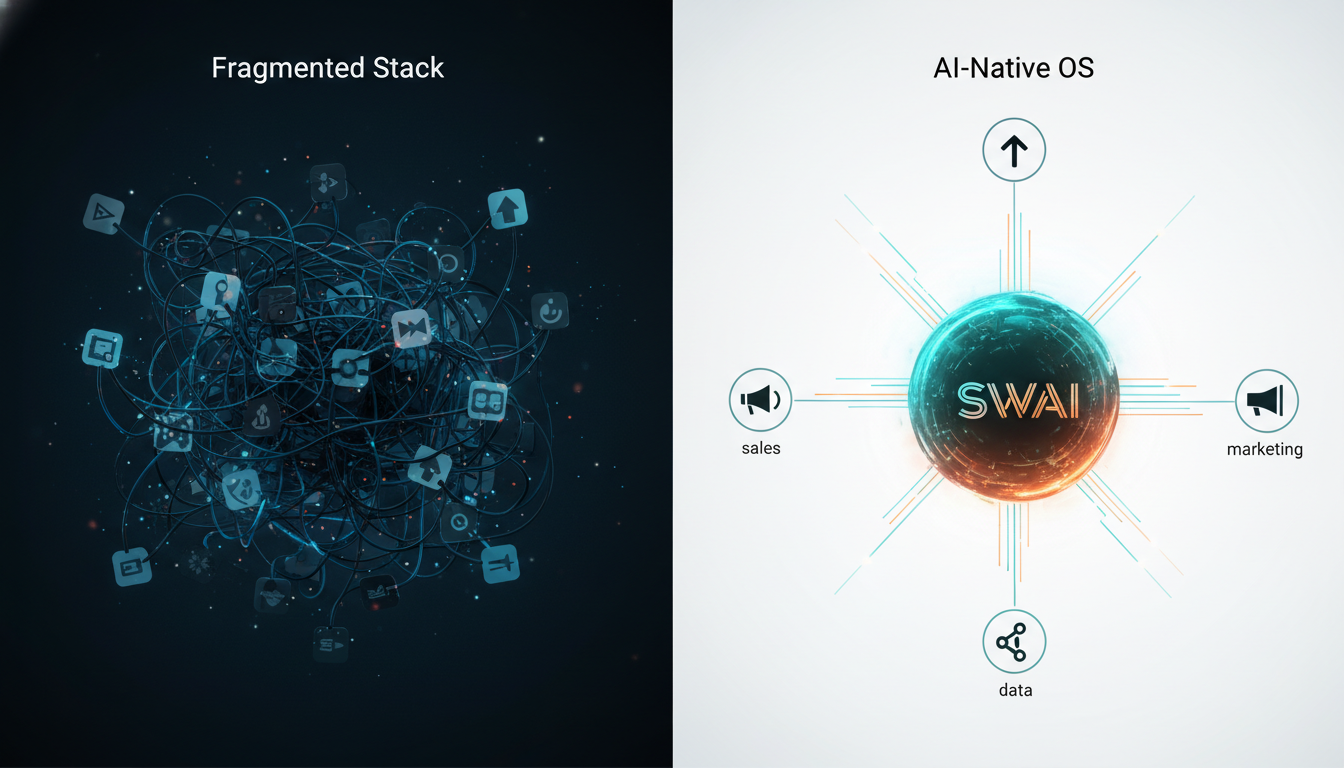
The solution isn't another tool to patch the system; it's a new system altogether. An AI-Native Revenue OS (Operating System) is designed from the ground up to eliminate the fragmentation tax. Instead of a collection of disconnected apps, it's a single, autonomous platform that manages your entire growth engine—from demand generation and authority building to a 24/7 AI-powered sales pipeline. It's an execution system, not just a set of tools. It takes your goal and autonomously works to deliver the outcome, optimizing in real-time and freeing you from the operational drag of a fragmented stack. This integrated approach saves time, cuts costs, and unlocks the real-time insights needed for predictable, scalable growth.
Conclusion
The fragmentation tax is more than just a theoretical concept; it's a real and substantial drain on your business's resources and potential. Every day you operate with a cobbled-together tech stack, you're paying it in the form of bloated subscriptions, wasted man-hours, and lost opportunities. It's time to stop treating the symptoms with yet another piece of software and start addressing the root cause. Challenge yourself to calculate what this hidden tax is costing your business and ask if your current approach is truly an engine for growth or just an anchor holding you back.
Your growth stack should be your biggest asset, not a hidden liability. But how can you be sure? The first step is to diagnose the health of your current system. We've developed a free, 2-minute audit to help you identify the hidden cracks, inefficiencies, and fragmentation taxes in your current setup. Discover your AI-Native Readiness Score and get a clear picture of where your growth engine is failing you—and the precise steps you can take to build a truly autonomous, high-performance alternative.
