
Introduction: The End of Simple Automation
For the last decade, the playbook for growth has been clear: automate everything. We connected our apps, set up triggers, and built intricate webs of 'If This, Then That' logic to escape manual work. It was an advantage. But that era is over. Today, simple automation is just the cost of entry. It’s a reactive system that does what it's told, but it never learns, adapts, or gets smarter.
The new competitive high ground isn't about making your machine run faster; it's about building a machine that thinks. The advantage now lies in creating a 'self-correcting' growth engine—an AI-native system that doesn't just execute tasks but actively learns from performance data to optimize its own strategy, getting more efficient with every lead it generates and every sale it closes. This isn't just a step up from automation; it's a fundamental shift in how businesses grow.

The Core Difference: From Reactive Triggers to Proactive Execution
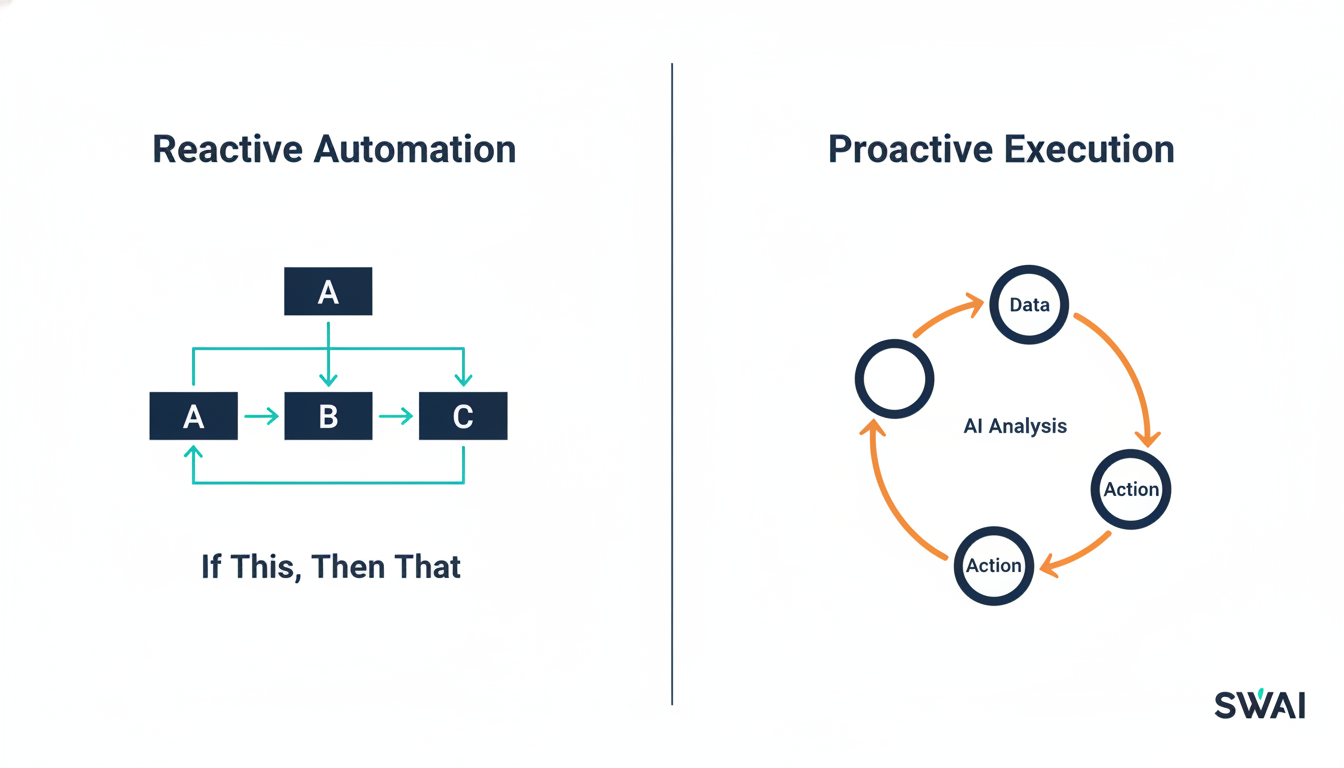
Most business automation operates on a simple, brittle principle: If This, Then That (IFTTT). If a form is submitted, then send an email. If a tag is added, then start a sequence. This is a one-way street. The system executes a command without any understanding of the outcome. Did that email lead to a sale? Did that sequence convert a high-value client? The system doesn't know, and it doesn't care.
This is the critical failure of a fragmented tool stack. It can perform tasks, but it can't make decisions.
A self-correcting engine operates on a profoundly different principle: Based on This Data, Do That Next. It’s a proactive execution model. It doesn't just follow a static rule; it analyzes performance data in real-time to determine the most effective next step. Based on the conversion rate of this landing page, it will allocate more traffic to it. Based on the sales data from last month's webinar, it will adjust the ad copy to attract more leads like the ones who actually converted. It's the difference between a soldier following orders and a commander reading the battlefield.
Principle 1: Unified Business Context
Why do generic AI tools so often produce bland, ineffective marketing? Because they lack context. A generic chatbot doesn't understand the deep psychological drivers of your ideal customer. A generic content writer doesn't know how your offer is positioned against your top three competitors. They are powerful tools operating in a vacuum.
This is why a system built on a unified business context will always win. Before a self-correcting engine ever writes an ad, deploys a funnel, or qualifies a lead, it first learns the fundamentals of your business: your precise offer, your target audience's deepest pain points, your market positioning, and your unique voice. This 'Business IQ' becomes the foundation for every action it takes. It stops guessing and starts executing based on a deep, strategic understanding of what moves the needle for you. The result is not just more marketing, but smarter marketing that resonates with the right people, every time.
Principle 2: Closing the Feedback Loop
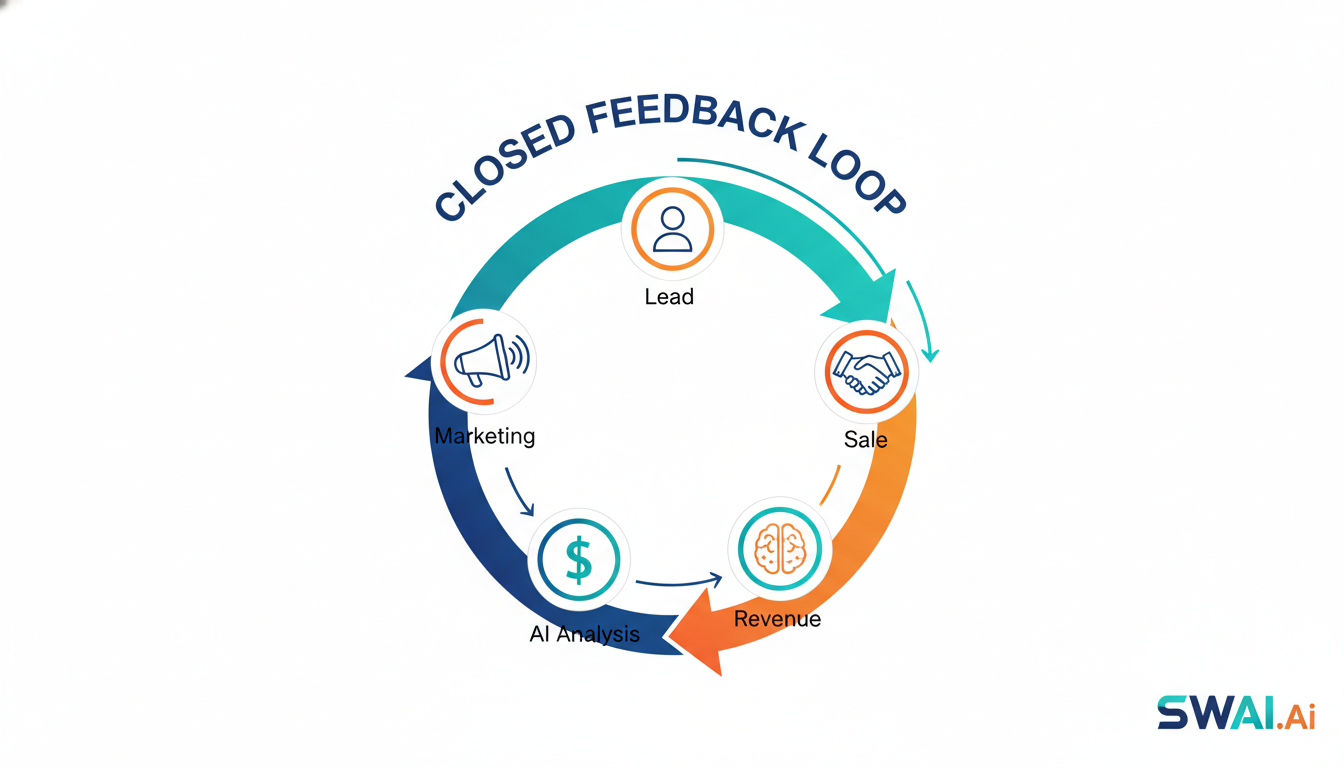
One of the biggest leaks in any growth machine is the gap between marketing action and sales outcome. The marketing team celebrates 500 new leads, but the sales team complains that only ten were qualified. The data on what truly works—which ad, which email, which funnel actually produced a profitable client—is lost in a sea of disconnected spreadsheets and dashboards. Without this information, you're doomed to repeat the same mistakes.
A self-correcting engine is designed to close this feedback loop. It connects the dots from the first ad impression to the final sales call and beyond. It tracks how leads behave, which ones convert, and what their ultimate value is to the business. This outcome data is then fed directly back into the system, which uses it to refine its own strategy. It learns to stop spending money on channels that produce low-quality leads and to double down on the messaging that attracts your best customers. It's no longer about disconnected tactics; it's about a single, intelligent system that continuously learns from its own results.
Principle 3: From Dashboards to Decisions
Founder-led businesses are drowning in data yet starving for insight. You have dashboards for your ads, your website analytics, your CRM, and your email provider. You spend hours every week trying to piece together the story, acting as the chief data analyst for your own company.
This is a low-leverage use of a founder's time. The future isn't more dashboards; it's smarter decisions. An AI-native execution system moves you from staring at data to commanding strategy. Instead of just presenting you with charts and graphs of what happened, it analyzes the entire system in real-time to identify the biggest bottlenecks and the most promising opportunities. It doesn't just show you a drop in conversion rate; it flags the potential cause and suggests a course of action. Your role shifts from being buried in the operational weeds to making high-level strategic calls, guided by a system that has already done the heavy analytical lifting for you.
Conclusion: Become the Architect, Not the Operator
Being the chief operator of your own growth machine is a trap. It keeps you stuck managing fragmented tools, wrestling with data, and patching leaks in a system that was never designed to scale. The only way to achieve real leverage is to change your role entirely—from operator to architect. It's time to stop pushing the buttons and start designing the engine.
Building a self-correcting system is the first step toward reclaiming your time and creating a truly scalable business. But where do you begin? The first step is to diagnose the health of your current growth infrastructure. Find out where your biggest operational drains are and see your personalized path to autonomous growth by taking our free AI-Native Readiness Audit.
