Introduction: The AI-Native Misconception
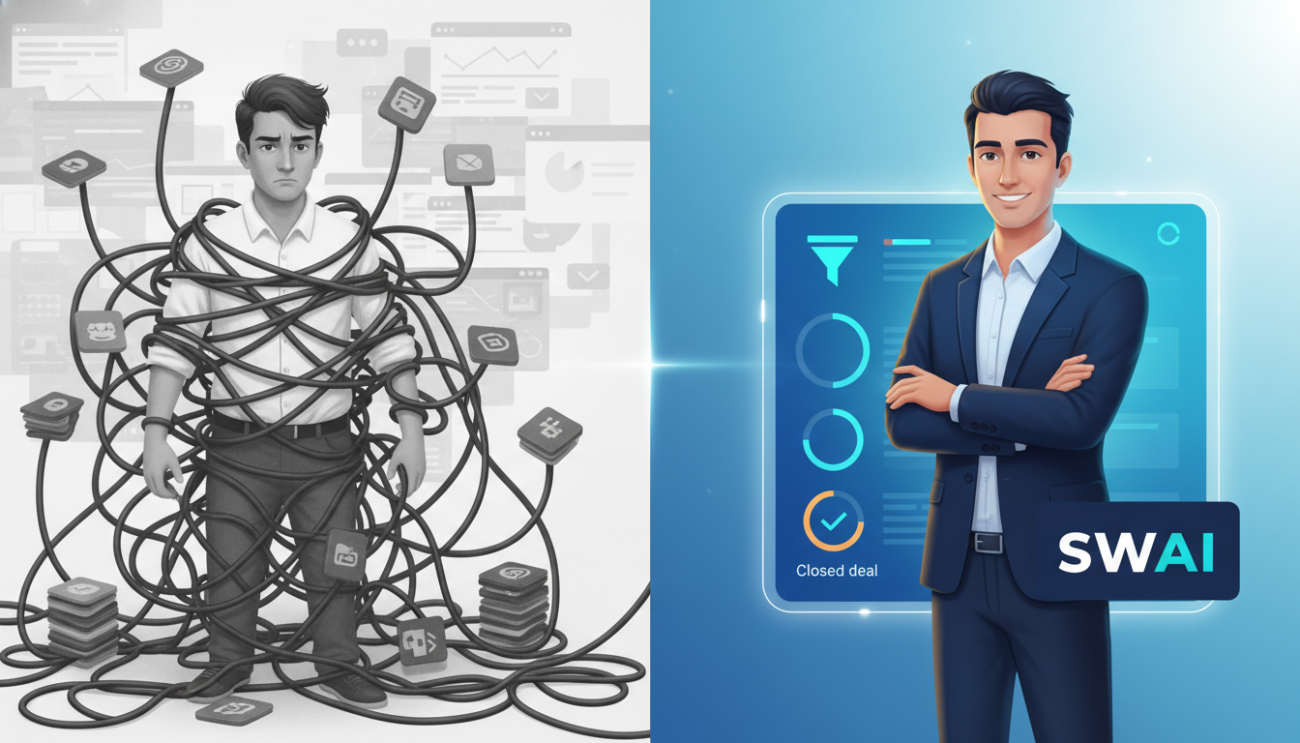
In the current market, the term "AI" is everywhere. It's easy to assume that using a generative AI tool for ad copy or a chatbot on your website makes your business "AI-native." But that's like saying owning a calculator makes you a mathematician. True AI-native infrastructure isn't about bolting on fragmented tools; it's about building your entire growth engine on a foundation of intelligence. It's the critical difference between basic automation—which simply follows pre-set rules—and an autonomous system that learns, adapts, and executes with context.
Pillar 1: Contextual Intelligence
Generic AI models are becoming a commodity. They can write an email or generate an image, but they don't understand your business. An AI-native system, in contrast, operates with deep contextual intelligence. Before it deploys a single ad or sends one follow-up email, it first learns your specific business landscape: your offers, your ideal customer psychology, your market positioning, and your unique bottlenecks. This isn't about using better prompts; it's about an execution layer that understands the why behind the what, allowing it to make smarter decisions that are perfectly aligned with your strategic goals, rather than just performing isolated tasks.
Pillar 2: Self-Correcting Infrastructure
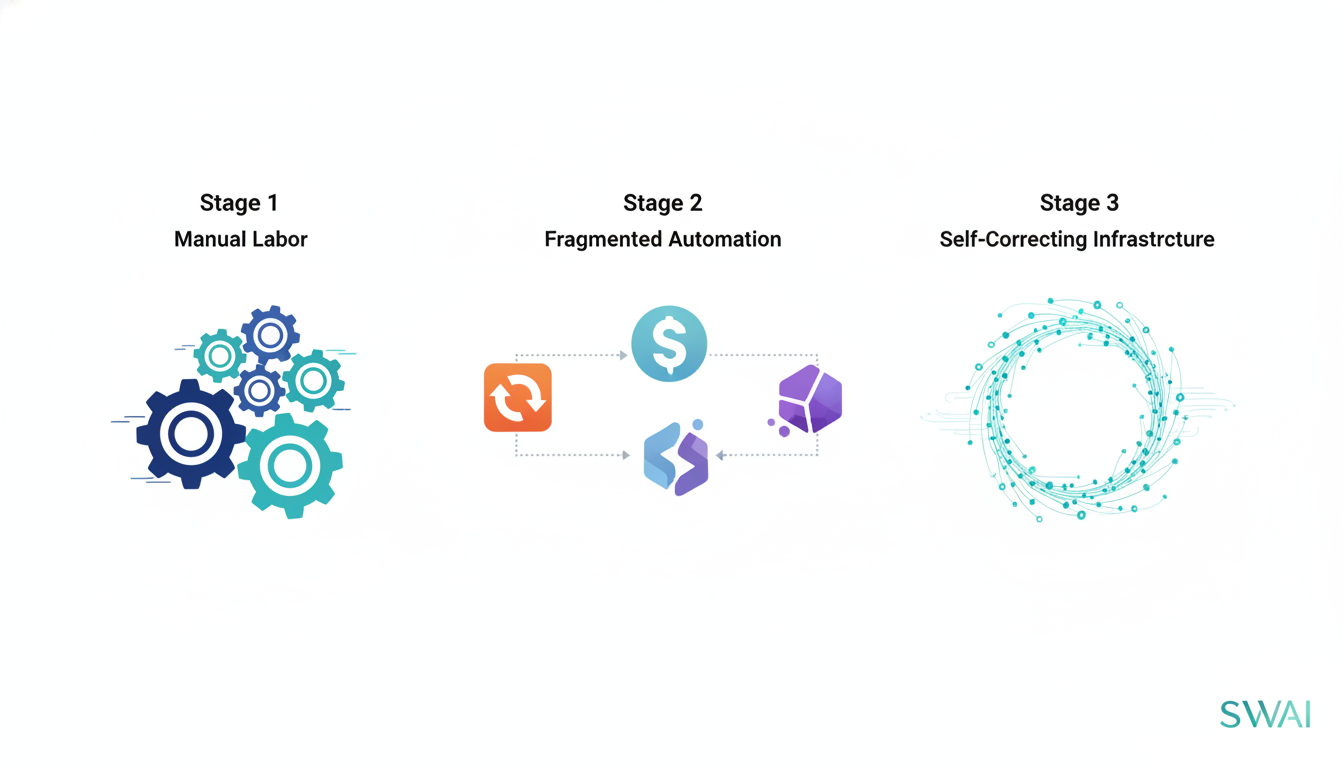
The old playbook relies on what can be described as 'organized labor'—you build a funnel, manually review the analytics, and then tweak it, hoping for better results next time. An AI-native business operates on a self-correcting infrastructure. This system doesn't just run; it learns from every interaction, every click, and every conversion. It continuously optimizes its own performance, adjusting targeting, messaging, and qualification flows in real-time. Your growth engine transforms from a static, brittle machine that requires constant human maintenance into a dynamic, resilient organism that gets smarter and more efficient over time.
Pillar 3: Unified Execution Layer
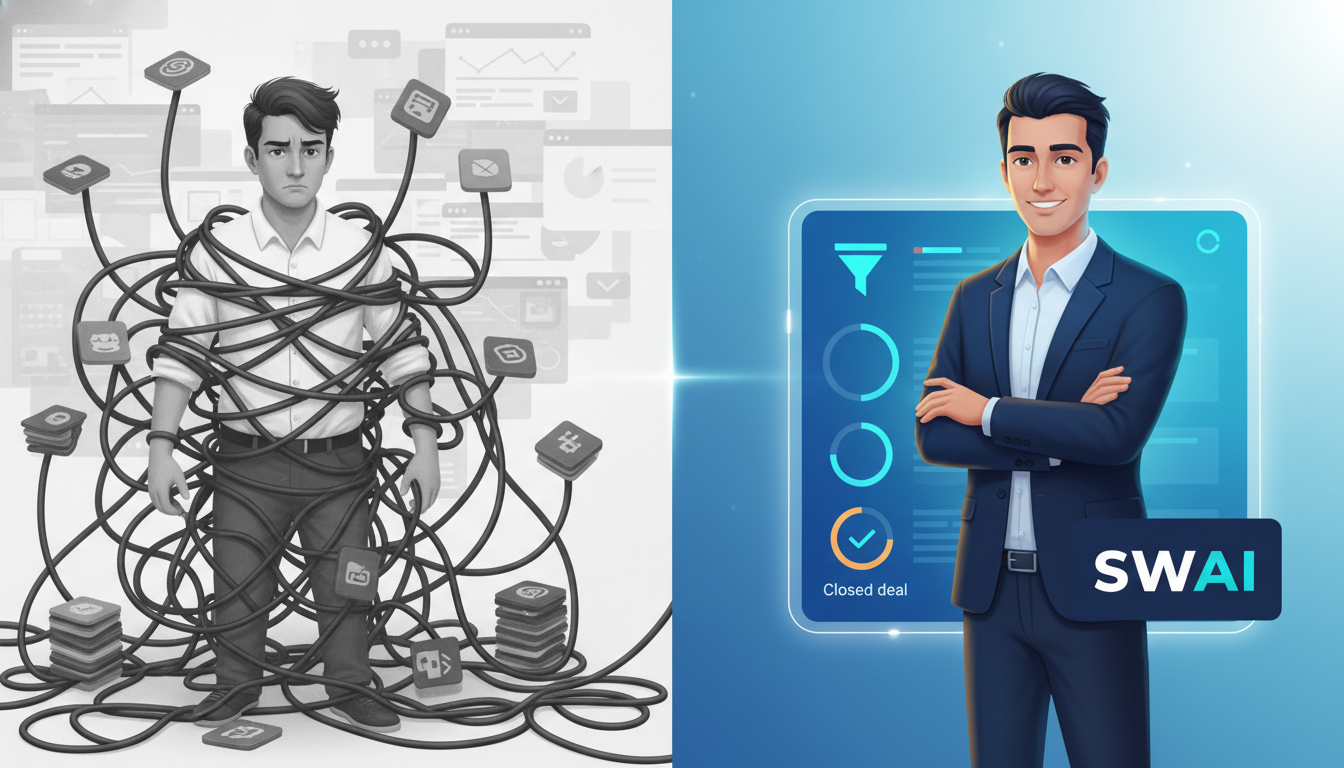
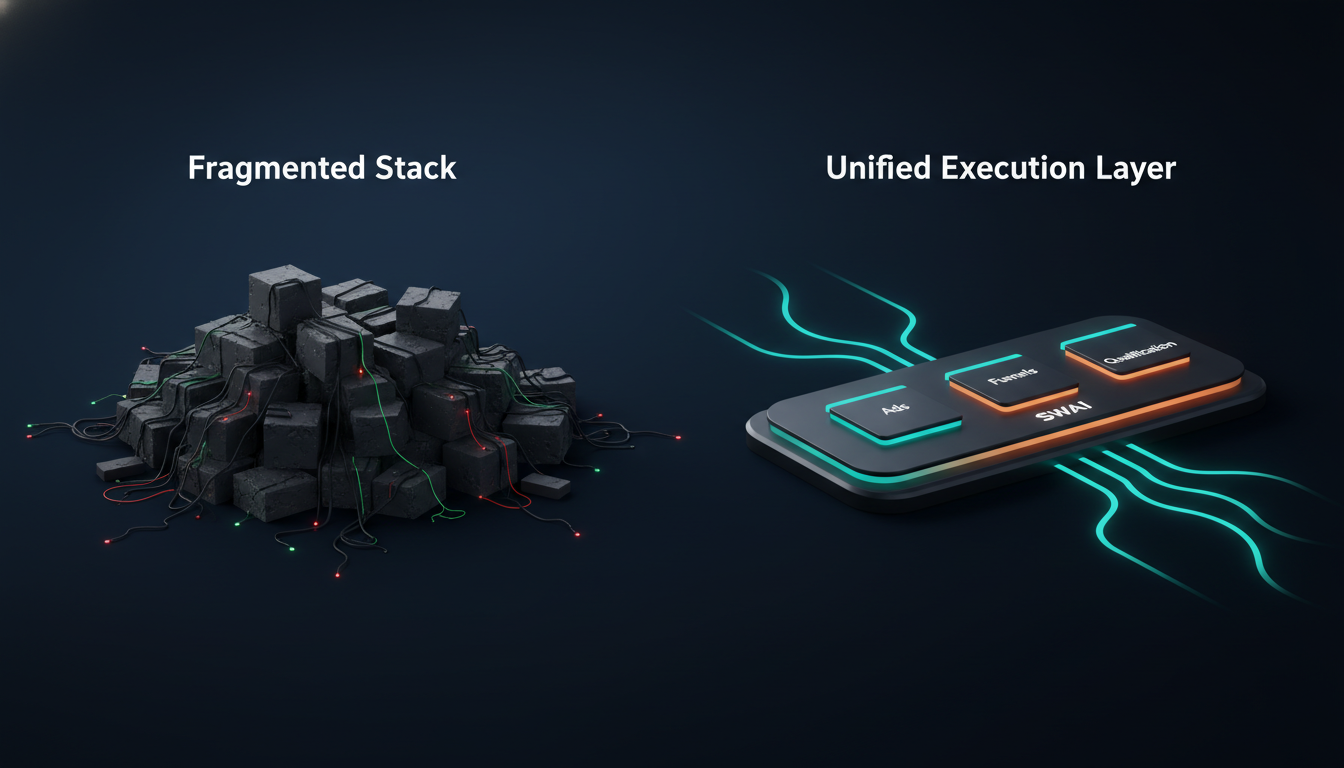
Most founder-led businesses suffer from operational chaos caused by a fragmented tech stack. Your CRM, landing page builder, email autoresponder, and ad platforms are all disconnected islands of data. Stitching them together requires a web of complex, breakable integrations and endless manual oversight. A true AI-native system replaces this chaos with a single, unified execution layer. It seamlessly integrates lead generation, funnel deployment, AI-powered qualification, and growth tracking into one intelligent system. This eliminates data silos, reduces operational overhead, and ensures every part of your customer acquisition process works in perfect harmony.
Pillar 4: Operator-Less Deployment
The final evolution in becoming AI-native is moving towards 'operator-less' deployment. The goal is not simply to create tools that assist the founder; it's to build systems that replace entire categories of manual work. A founder's time is best spent on vision, strategy, and high-value relationships, not on configuring workflows or managing campaigns. An AI-native infrastructure handles the heavy lifting of execution—from launching a webinar funnel to nurturing leads and qualifying prospects—autonomously. This frees you, the founder, from being the operational bottleneck and allows you to function purely as the strategist directing the vision.
How to Assess Your AI-Native Readiness
Are you truly building an AI-native business, or are you just using AI tools? Ask yourself these critical questions about your current growth systems:
**Does my system learn?** Does your marketing get smarter and more effective on its own with every dollar spent and every lead generated, or does it rely on you to manually analyze data and make changes?
**How fragmented is my execution?** How many different software subscriptions are you paying for to run one cohesive customer acquisition campaign? How much time is spent managing the connections between them?
**What is my 'speed-to-live'?** If you have a great new offer, can you build, launch, and optimize a complete acquisition system around it in days, or does it take weeks of technical setup and coordination?
**Where is the human bottleneck?** If you were to step away for two weeks, would your lead generation and qualification grind to a halt?
Answering these questions honestly will reveal the gap between where your business is and where it needs to be to compete.

The Real Competitive Edge
The future doesn't belong to businesses that simply use AI as a tactic. It belongs to those who build AI into their core operational DNA. This is the shift from leveraging AI as a tool to operating as a truly AI-native organization. It's the most significant competitive advantage you can build for the decade ahead. If you're tired of operational chaos and fragmented systems, it's time to get a clear benchmark of your current capabilities. Discover your AI-Native Readiness Score and see the personalized path to a more autonomous, scalable, and profitable business.
